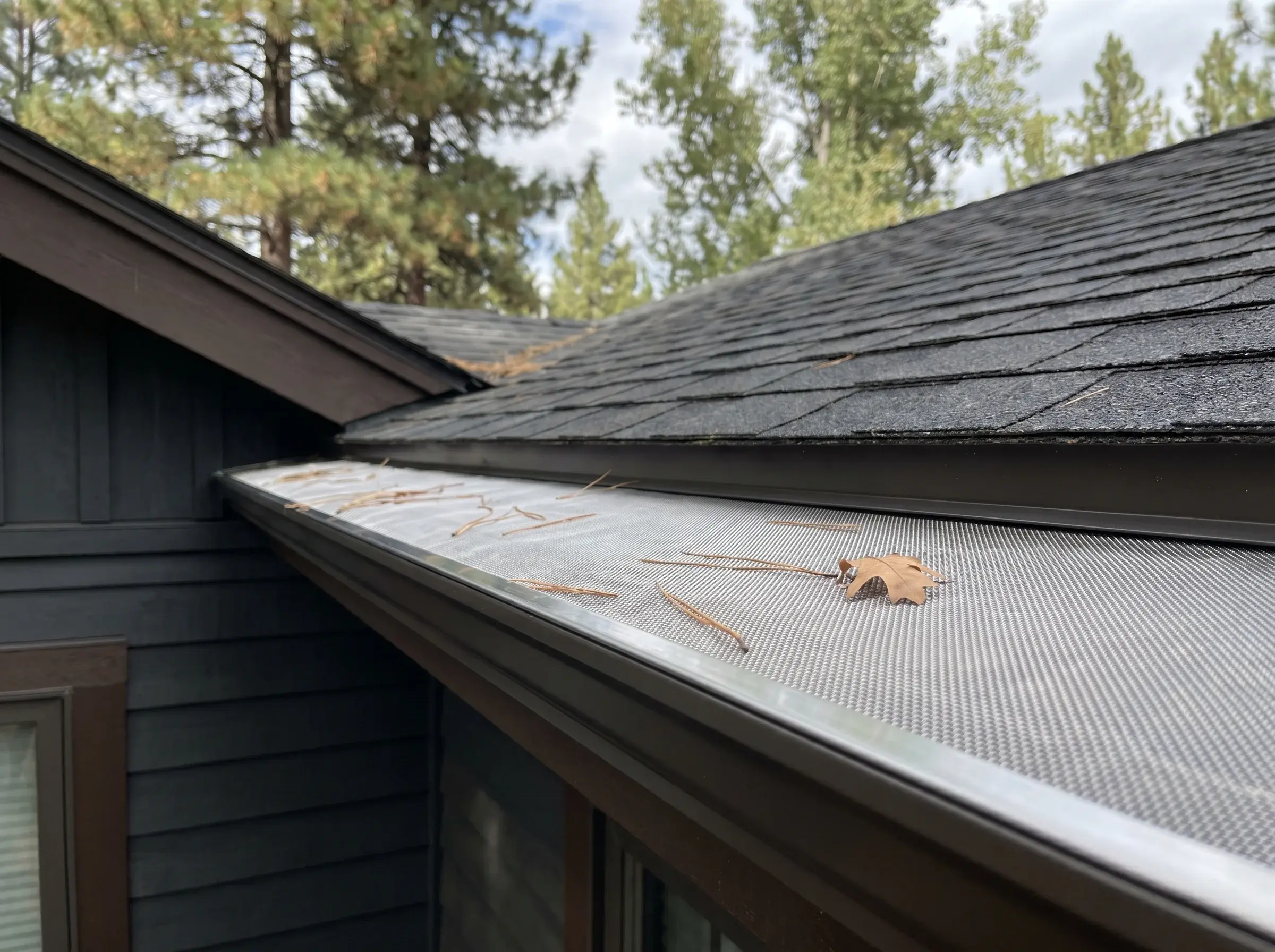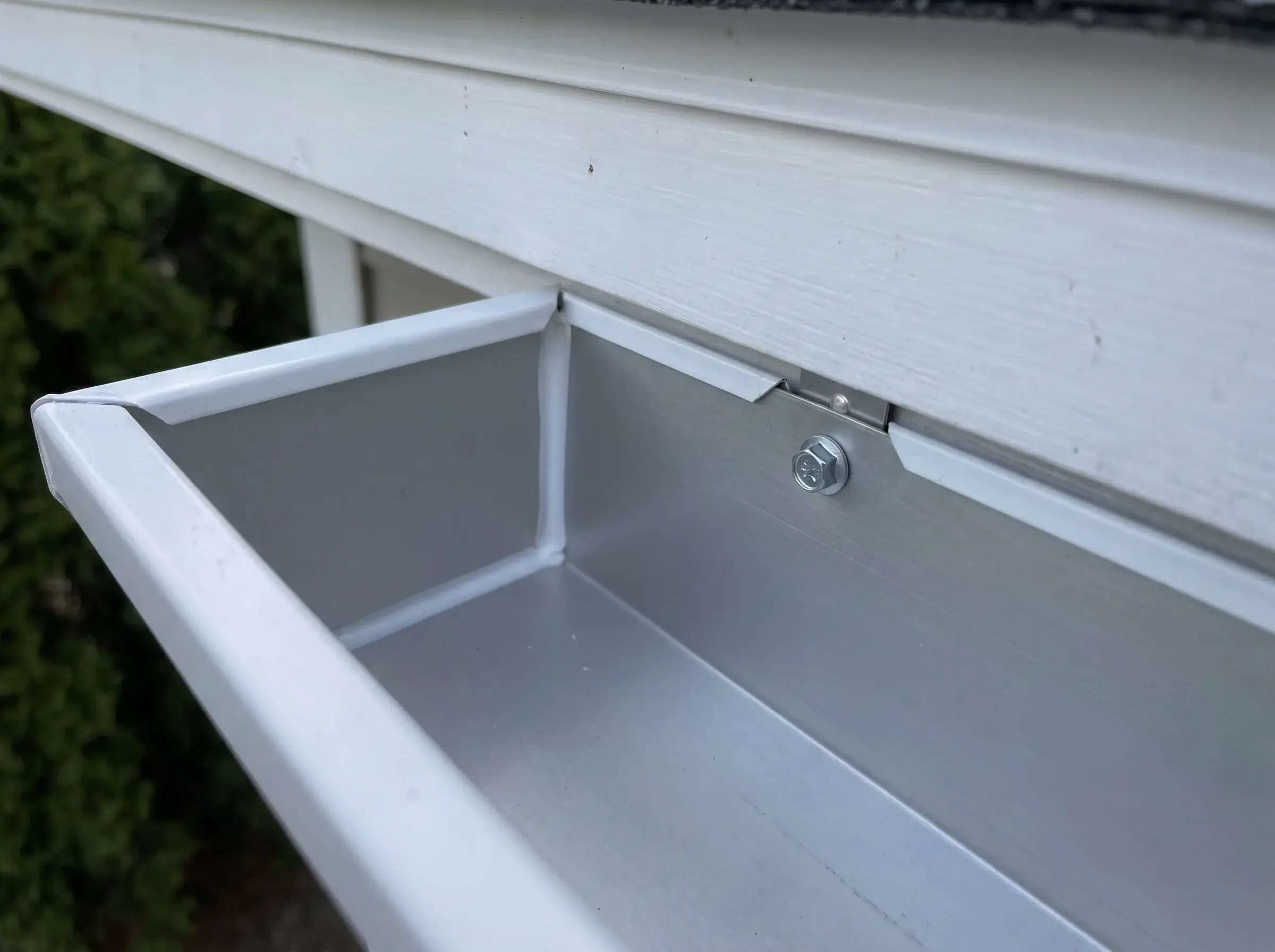
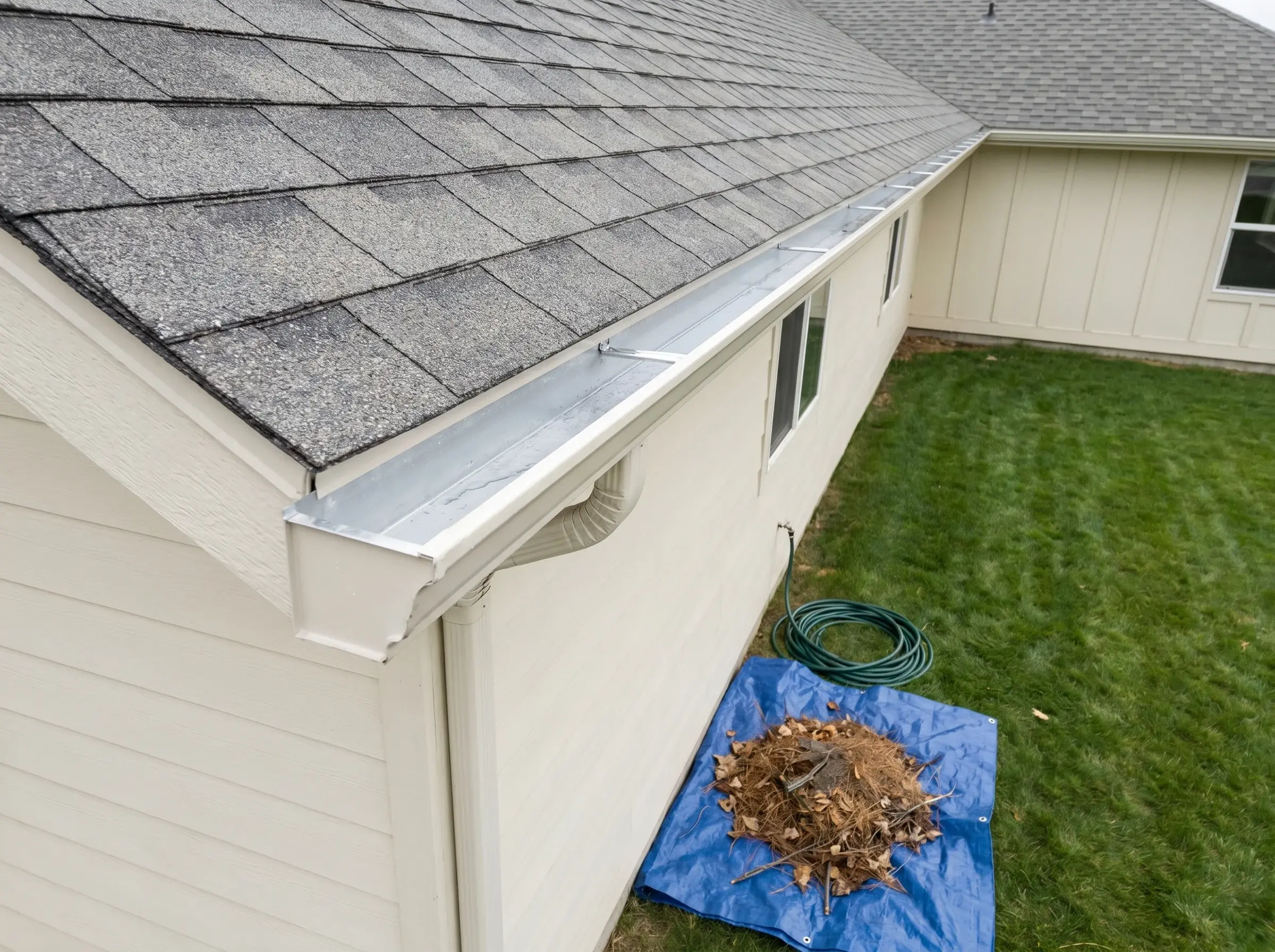
The honest answer for most Treasure Valley homes: twice a year. Once in late spring after cottonwood and locust seed pods drop, and once in late fall after the deciduous leaves are down. Homes under ponderosa pine, Douglas fir, or near the Boise River often need a third pass, sometimes a fourth, because the debris load runs heavier and lasts longer.
Section
The default Treasure Valley schedule
Twice a year works because it brackets the two seasons that actually fill gutters here: late spring seed-pod drop and late fall leaf drop. Doing both is what keeps fascia dry, downspouts open, and water moving off your roof during the storms that follow each cleaning window.
- Late May or early June, after cottonwood seed pods and locust pods finish dropping. This catches the spring load before summer thunderstorms arrive.
- Late October to mid-November, after most deciduous leaves are down and before December's run of freezing nights. Gutters that go into winter clean don't dam up with ice the way clogged ones do. Timing by tree type and a pre-winter checklist: fall gutter cleaning in Boise.
Section
When you need more than 2x per year
Some sites just generate more debris than a standard schedule can keep up with. If any of these apply to your home, plan on three or four cleanings instead of two.
- Pine or fir canopy directly over the roof (Foothills, Hidden Springs, parts of the East End). Needles drop year-round, not just in fall.
- Cottonwoods within about 50 feet, common along the Boise River, in Garden City, and Greenbelt-adjacent neighborhoods.
- Greenbelt-adjacent lots in Garden City, Southeast Boise, and along the river corridor in Eagle and Star.
- After major windstorms. High wind blows debris into gutters in concentrated bursts, especially in Caldwell, Middleton, and Mountain Home.
- After spring hail. Nampa and Canyon County see periodic hail events that strip leaves and small branches into gutters in one storm.
- Heavy locust or sycamore cover — seed pods and broad leaves both overwhelm open gutters faster than you'd expect.
Section
Neighborhood-specific patterns
Treasure Valley microclimates vary more than people expect. A Foothills home under pines lives in a different debris environment than a production build in west Meridian, and the cleaning schedule should reflect that.
| Area | Typical frequency | Why |
|---|---|---|
| Boise Foothills / Hidden Springs | 3–4x per year | Year-round pine and fir needle drop |
| North End | 2–3x per year | Mature deciduous canopy plus older roofs |
| Bench | 2x per year | Mixed tree cover, older homes with smaller gutters |
| Garden City (river-adjacent) | 3x per year | Cottonwood and locust along the river corridor |
| Meridian (production builds) | 1–2x per year | Limited mature tree cover on newer lots |
| Nampa / Caldwell ag-area | 2x per year | Ag-dust accumulation matters as much as leaves |
| Eagle / Star (river homes) | 3x per year | Cottonwood, willow, and Russian olive load |
Want this handled by a local crew?
Free on-site estimate across the Treasure Valley — call or send a few details and we'll get back the same day.
Section
Why missing cleanings costs more than the cleaning
The math on skipping a cleaning is bad. A standard cleaning falls in a few-hundred-dollar range; the damage that follows a missed cleaning compounds fast.
- Fascia rot from overflow water saturating the wood behind the gutter — repair runs into the four figures once paint and siding get involved.
- Foundation seepage from downspouts that back up and dump at the base of the wall instead of flowing through the system.
- Ice dams in winter when standing water in a clogged gutter freezes, blocks subsequent meltwater, and pushes it under the shingles.
- Downspout backups that pressure-pop the elbow joint and dump water against the house in the middle of a storm.
Section
Cleaning vs gutter guards: when does it tip?
If your home is in the three-or-four-cleanings-per-year category, gutter guards usually pay for themselves within a few seasons of avoided cleaning visits and avoided incidental damage. We cover the full comparison in our /resources/gutter-guards-vs-cleaning breakdown — including the cases where staying on a cleaning schedule is genuinely the right call and guards aren't.
Section
What a proper cleaning looks like
Not every cleaning service does the same job. A good one looks like this:
- Hand removal of debris. Not leaf-blowing it out (which scatters it across your roof and yard) and not pressure-washing (which packs the clog deeper into the downspout).
- Downspout flush at every drop. A hose run through each downspout to confirm flow, not just visual inspection.
- Written inspection notes on sags, leaks, pulled hangers, or fascia damage spotted from the ladder.
- Debris bagged and hauled away from the property, not left in a pile by the curb.
Section
Treasure Valley seasonal stress events
A few times a year, the valley produces a single weather event that effectively counts as a cleaning trigger on its own. If one of these hits your area, walk the perimeter and check for visible debris before the next storm.
- Spring hailstorms across Nampa, Caldwell, and Middleton strip leaves and small twigs into gutters in one event.
- Summer thunderstorms valley-wide produce concentrated water bursts that expose any partial clogs immediately.
- Fall seed-pod surge in Garden City, Southeast Boise, and along the river corridor in Eagle, where cottonwood pods drop in concentrated windows.
- Winter ice events on the Bench and in older Boise neighborhoods turn clogged gutters into ice dams within a day or two of sub-freezing nights.
FAQ
Common questions on this topic.
Is twice a year really enough for a Boise home?
When is the best time to schedule the fall cleaning?
Can I do gutter cleaning myself?
Do gutter guards eliminate the need for cleaning entirely?
What happens if I skip a cleaning for a year?
How long does a gutter cleaning take?
About the author
Mark
Owner· Licensed Idaho Contractor RCE-6681702
Mark owns Boise Gutter Guards, a licensed Idaho contractor (RCE-6681702) serving Boise, Meridian, Eagle, Nampa, Caldwell, Kuna, Star, and Garden City. He started the company after seeing too many Treasure Valley homeowners get sold under-sized gutters, nailed-on hangers, and silicone-sealed seams that fail in the first hard freeze. Every estimate is done in person, every install is backed in writing, and every customer gets a job-site walkthrough before the crew leaves.