Fascia & Soffit Repair in the Treasure Valley
Rebuild the board your gutters bolt to.
Free on-site estimate · No-pressure quote · Same crew start to finish
QUICK ANSWER
Fascia and soffit repair in the Treasure Valley generally tracks national pro ranges — roughly $6–$20 per linear foot for sound-wood replacement and about $10–$23 per foot where rot is involved. We tear out the failed board, treat the rafter tails behind it, rebuild on rot-resistant material, and re-hang your gutters off solid wood.
- 5″ & 6″ K-Style
- Half-Round
- Aluminum
- Color-Matched
- Hidden Hangers
WHAT’S INCLUDED
What’s included in Fascia & Soffit Repair?
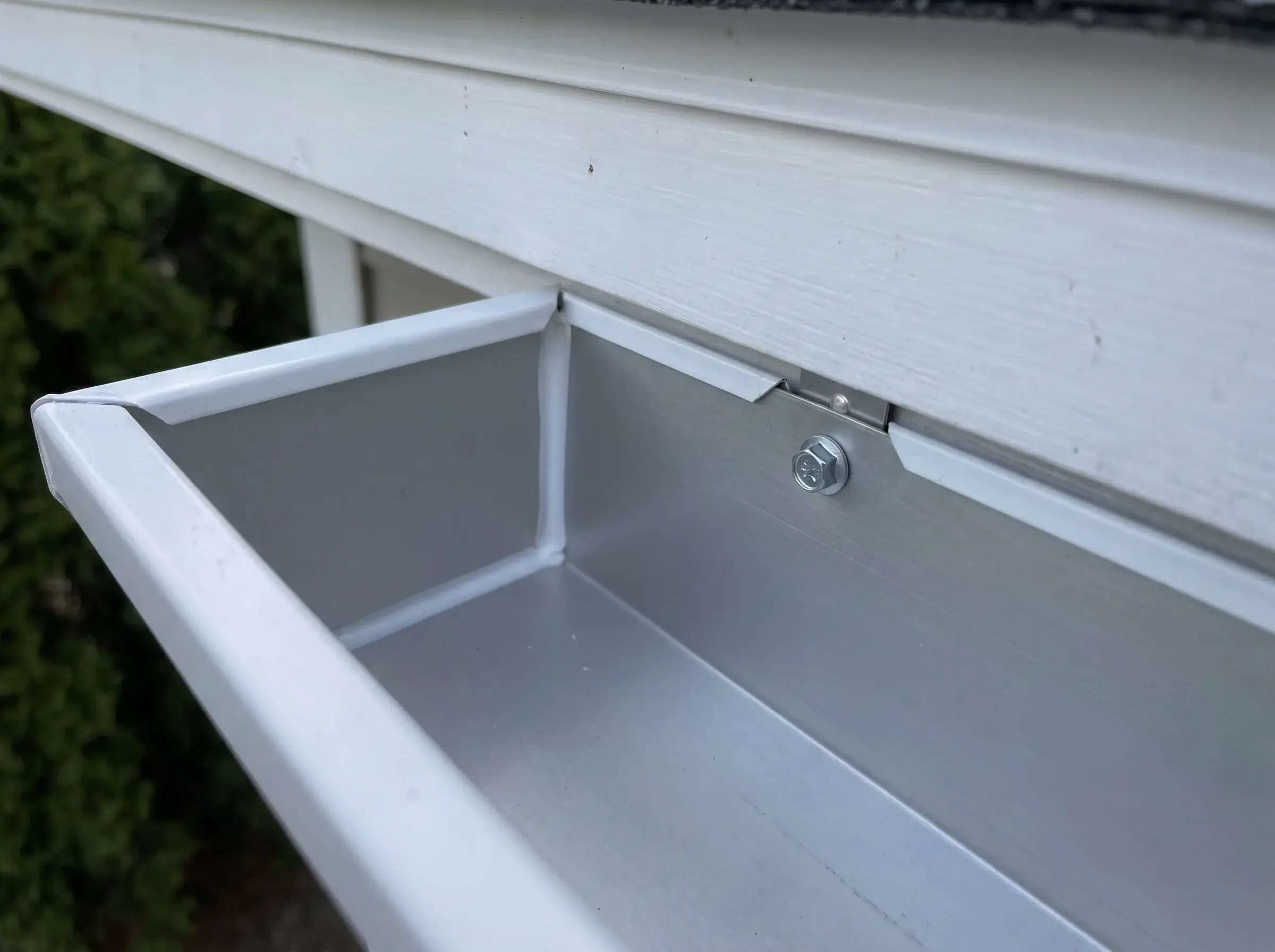
The fascia is the board your gutters bolt to — and when gutters clog or overflow, they saturate that board from behind, push the paint off from the inside, and rot the wood until it goes soft and spongy. Water then drips onto the soffit below, so soffit decay almost always follows fascia rot. We tear out the rotted fascia and damaged soffit, inspect and treat the rafter tails behind them, rebuild on rot-resistant material, restore soffit ventilation, and re-hang your gutters off a solid nailing surface. You cannot re-hang gutters properly on punky wood — fixing the fascia is what makes the gutter repair hold.
- Tear-out of rotted, soft, or spongy fascia board
- Removal and replacement of stained or decayed soffit panels
- Inspection and treatment of rafter tails / sub-fascia behind the boards
- Rebuild in rot-resistant material (PVC, composite, cement/Hardie, or aluminum-wrapped wood)
- Soffit ventilation restored so attic airflow stays correct
- Gutters re-pitched and re-hung off a solid nailing surface
WHY US
Why Treasure Valley homeowners choose us.
Stop the cascade from fascia rot into soffit and roof framing
Give your gutters a solid board to bolt back into
Rebuild in materials that resist the moisture rot that destroys bare wood
Protect the eaves on older Boise homes with century-old wood detailing
OUR PROCESS
How does fascia & soffit work?
Inspection and rot mapping
We probe the fascia and soffit to find where the wood has gone soft, trace how far the decay has spread, and check the rafter tails behind the boards. Because fascia rot is usually gutter-driven, we also look at why water is reaching the wood — overflow, back-pitch, a pulled section, or a failed downspout — so the repair fixes the cause, not just the symptom.
Gutter detachment and tear-out
We detach the affected gutter runs, then remove the rotted fascia board and any decayed soffit panels. Off comes everything that's soft, spongy, or showing the cascade staining where water has been dripping from the fascia onto the soffit.
Rafter tail treatment and substrate prep
With the boards off, we inspect and treat the exposed rafter tails and sub-fascia. Any framing that's begun to decay from prolonged wetness is addressed before we close the eave back up — covering rot doesn't stop it.
Rebuild on rot-resistant material
New fascia and soffit go up in the material you chose — PVC, composite, cement/Hardie, or aluminum-wrapped wood — sized and fastened to give the gutters a solid nailing surface. We restore continuous soffit ventilation so the attic airflow that keeps the eave dry (and helps prevent ice dams) stays intact.
Re-hang and re-pitch gutters
Gutters are re-hung on hidden-hanger screws into the new solid board, re-pitched toward the downspouts, and resealed at any joints we opened. This is the step that's impossible on rotted wood and the reason fascia repair and gutter work belong in the same visit.
Water test and walkthrough
We flush the re-hung runs to confirm the gutters drain and the rebuilt eave stays dry. We walk the work with you, explain what caused the rot, and leave a written summary so you know what to watch for going forward.
MATERIALS
Fascia & Soffit materials and options.
Fascia material
- PVC / cellular composite (rot-proof, our usual recommendation in a gutter-fed eave)
- Cement / Hardie board (paintable, moisture-resistant)
- Aluminum-wrapped wood (clean finish, sheds water)
- Cedar (traditional look for historic homes; needs maintenance)
Soffit material
- Vented vinyl soffit panels (restores attic airflow)
- Vented aluminum soffit panels
- Solid panels with continuous intake venting where the design calls for it
Fasteners and hangers
- Stainless or coated screws (no nails that work loose as wood moves)
- Hidden-hanger screws for re-hanging gutters into the new board
COST RANGE
How much does fascia & soffit cost in the Treasure Valley?
Fascia & Soffit pricing depends entirely on the scope of the work — the size of the affected area, the underlying cause, and what the repair or prevention plan involves. We don’t publish a flat range because an honest number requires seeing the job in person.
Get a free on-site estimate and we’ll give you a written, itemized quote — no guesswork, no obligation.
These are Treasure Valley ranges only — the on-site visit gives the real number. Actual cost depends on roof access, story count, existing condition, and the system selected.
WHAT AFFECTS PRICE
Fascia and soffit repair is priced by linear footage and the extent of the rot — sound-wood replacement is cheaper than tearing into water-damaged board that's spread to the soffit and rafter tails. Material choice (PVC, composite, cement, aluminum-wrap, cedar) and story count also move the number. We work from national professional ranges adapted to the Treasure Valley because no Idaho-specific published per-foot figure exists; the on-site visit produces the written quote.
Use the interactive calculator →Real numbers come from on-site visits.
Read the full Fascia & Soffit cost guide — tiers, components & local factors →
SERVICE AREA
Available in Fascia & Soffit across the Treasure Valley.
We serve Boise and all surrounding Treasure Valley communities. Select your city for local pricing, neighborhoods, and availability.
Boise, ID
Ada County
Fascia & Soffit in Boise →
Meridian, ID
Ada County
Fascia & Soffit in Meridian →
Eagle, ID
Ada County
Fascia & Soffit in Eagle →
Nampa, ID
Canyon County
Fascia & Soffit in Nampa →
Caldwell, ID
Canyon County
Fascia & Soffit in Caldwell →
Kuna, ID
Ada County
Fascia & Soffit in Kuna →
Star, ID
Ada County
Fascia & Soffit in Star →
Garden City, ID
Ada County
Fascia & Soffit in Garden City →
Hidden Springs, ID
Ada County
Fascia & Soffit in Hidden Springs →
Southeast Boise, ID
Ada County
Fascia & Soffit in Southeast Boise →
West Boise, ID
Ada County
Fascia & Soffit in West Boise →
Middleton, ID
Canyon County
Fascia & Soffit in Middleton →
Emmett, ID
Gem County
Fascia & Soffit in Emmett →
Mountain Home, ID
Elmore County
Fascia & Soffit in Mountain Home →
More Services
Other services in the Treasure Valley
Gutter Guard Installation
Stop cleaning gutters for good.
See gutter guards →Gutter Installation & Replacement
Seamless gutters that actually drain.
See gutter installation →Gutter Repair
Fix leaks, sags, and pulled-away sections.
See gutter repair →Gutter Cleaning
Hand-cleaned gutters, flushed downspouts.
See gutter cleaning →Seamless Gutter Installation
Formed on-site. No joints to leak.
See seamless gutters →Copper Gutter Installation
50-year gutters that get better looking over time.
See copper gutters →Half-Round Gutter Installation
The correct profile for craftsman and historic homes.
See half-round gutters →Ice Dam Prevention
Stop the freeze-thaw cycle before it reaches your ceiling.
See ice dam prevention →Downspouts & Drainage
Get roof water away from the foundation.
See downspouts →CHOOSING A CONTRACTOR
What to ask any fascia & soffit contractor.
These are the questions we’d ask if we were hiring someone for our own home. A legitimate contractor answers all of them without hesitation.
Questions to ask
- Will you identify and fix the gutter problem that caused the rot, not just replace the board?
- Are you inspecting and treating the rafter tails behind the fascia before closing it up?
- What material are you replacing with, and why that choice for a gutter-fed eave?
- Will the new soffit keep the attic ventilation intact?
- Are the gutters being re-hung on hidden-hanger screws into the new board?
- Are you a licensed Idaho contractor? (License number should be on the estimate.)
Red flags to watch for
- Contractor replaces the fascia but never looks at why water was reaching it — the gutter cause goes unfixed and the new board rots too.
- New fascia covered over rotted rafter tails instead of treating the framing first.
- Bare untreated pine fascia installed in a gutter-fed eave, where it will rot again.
- Soffit panels replaced solid, blocking the attic ventilation that keeps the eave dry.
- Gutters re-nailed to the new board instead of re-hung on hidden-hanger screws.
- No discussion of attic insulation or ventilation on a home with ice-dam-driven eave damage.
WHY PROFESSIONAL
Is professional fascia & soffit worth it?
The DIY fascia fix is usually a length of pine from the home store, some caulk, and paint over the soft spot. It buys a season — but if the gutter that rotted the board in the first place still overflows or back-pitches, the new wood goes soft just as fast, and meanwhile the decay keeps cascading into the soffit and rafter tails. A proper repair fixes the water source, treats the framing behind the board, rebuilds in a rot-resistant material, and re-hangs the gutters off solid wood so the whole eave stops feeding itself moisture. That's the difference between patching the symptom and ending the cycle.
Ready for Fascia & Soffit in the Treasure Valley?
Free on-site estimates. Licensed Idaho contractor. Call (208) 247-2660 or request a quote online.
BEFORE YOU BOOK
How we run the job and what we stand behind.
Our process, step-by-step
Seven steps from quote to walkthrough. What to expect at every stage, including lead time, install day, and post-install follow-up.
Workmanship & material warranty
What our workmanship covers, what manufacturer warranties cover, and what’s explicitly not covered. Specific terms disclosed in writing on every estimate.
Frequently asked questions
How much does fascia and soffit repair cost in the Treasure Valley?
What causes fascia rot in the first place?
Can you replace the fascia and re-hang my gutters in one visit?
What material do you replace rotted fascia with?
How do ice dams damage fascia and soffit?
Why do older Boise homes need fascia repair so often?
Get a free Fascia & Soffit estimate today.
Licensed · Insured · Locally owned in the Treasure Valley.