Fascia & Soffit Repair in Mountain Home, ID
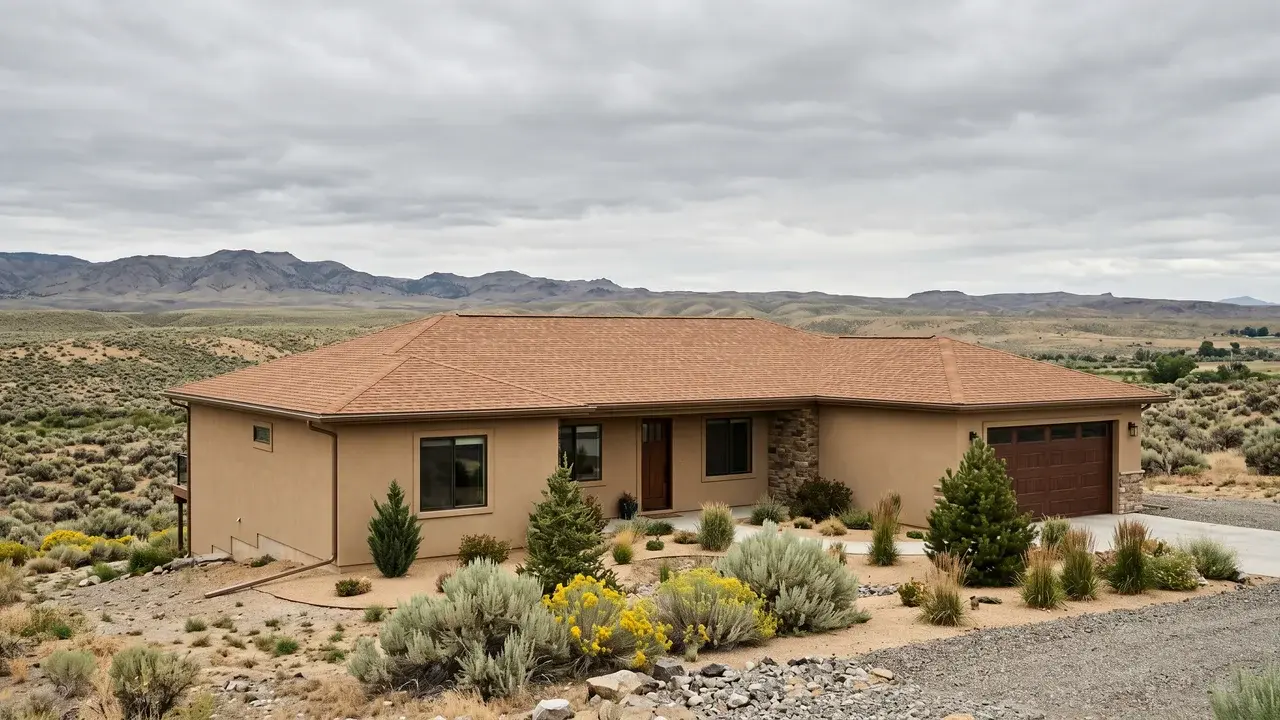
Mountain Home is the Elmore County seat, sitting about 45 minutes southeast of Boise in the high desert. Mountain Home Air Force Base anchors the local economy, and the housing mix runs from older downtown homes to newer subdivisions and base-adjacent rentals. We service Mountain Home as part of our extended service area — the drive is longer than core Treasure Valley cities, but conditions (relentless wind, dry summers, military-family turnover) keep demand consistent.
Free on-site estimate · No-pressure quote · Same crew start to finish
QUICK ANSWER
Fascia and soffit repair in the Treasure Valley generally tracks national pro ranges — roughly $6–$20 per linear foot for sound-wood replacement and about $10–$23 per foot where rot is involved. We tear out the failed board, treat the rafter tails behind it, rebuild on rot-resistant material, and re-hang your gutters off solid wood.
- 5″ & 6″ K-Style
- Half-Round
- Aluminum
- Color-Matched
- Hidden Hangers
LOCAL CONTEXT
Why Mountain Home homes need fascia & soffit.
Mountain Home's high-desert climate runs hotter, drier, and windier than the Boise valley. Less rainfall overall, but the rain that does come arrives in concentrated summer thunderstorms that overwhelm undersized downspouts. Sub-zero winter nights drive ice-dam risk on poorly draining systems.
In Mountain Home, this typically means homes in Downtown Mountain Home and Base-adjacent neighborhoods, we provide the same on-site estimate and written quote we deliver across the Treasure Valley.
- Rental and base-adjacent homes often have deferred maintenance on gutters that have gone years without cleaning.
- Relentless high-desert wind pulls nailed gutter sections loose — screws into solid fascia are non-negotiable here.
- Dry summers and intense UV exposure accelerate sealant failure on end caps and seams more than valley-floor cities see.
OUR APPROACH
How we handle fascia & soffit in Mountain Home.
Inspection and rot mapping
We probe the fascia and soffit to find where the wood has gone soft, trace how far the decay has spread, and check the rafter tails behind the boards. Because fascia rot is usually gutter-driven, we also look at why water is reaching the wood — overflow, back-pitch, a pulled section, or a failed downspout — so the repair fixes the cause, not just the symptom.
Gutter detachment and tear-out
We detach the affected gutter runs, then remove the rotted fascia board and any decayed soffit panels. Off comes everything that's soft, spongy, or showing the cascade staining where water has been dripping from the fascia onto the soffit.
Rafter tail treatment and substrate prep
With the boards off, we inspect and treat the exposed rafter tails and sub-fascia. Any framing that's begun to decay from prolonged wetness is addressed before we close the eave back up — covering rot doesn't stop it.
Rebuild on rot-resistant material
New fascia and soffit go up in the material you chose — PVC, composite, cement/Hardie, or aluminum-wrapped wood — sized and fastened to give the gutters a solid nailing surface. We restore continuous soffit ventilation so the attic airflow that keeps the eave dry (and helps prevent ice dams) stays intact.
WHAT’S INCLUDED
Fascia & Soffit in Mountain Home — what we cover.
- Tear-out of rotted, soft, or spongy fascia board
- Removal and replacement of stained or decayed soffit panels
- Inspection and treatment of rafter tails / sub-fascia behind the boards
- Rebuild in rot-resistant material (PVC, composite, cement/Hardie, or aluminum-wrapped wood)
- Soffit ventilation restored so attic airflow stays correct
- Gutters re-pitched and re-hung off a solid nailing surface
Want a quick range for fascia & soffit in Mountain Home? Fascia and soffit repair is priced by linear footage and the extent of the rot — sound-wood replacement is cheaper than tearing into water-damaged board that's spread to the soffit and rafter tails. Material choice (PVC, composite, cement, aluminum-wrap, cedar) and story count also move the number. We work from national professional ranges adapted to the Treasure Valley because no Idaho-specific published per-foot figure exists; the on-site visit produces the written quote.
Open the calculator →COST RANGE
How much does fascia & soffit cost in Mountain Home?
Fascia & Soffit pricing depends entirely on the scope of the work — the size of the affected area, the underlying cause, and what the repair or prevention plan involves. We don’t publish a flat range because an honest number requires seeing the job in person.
Get a free on-site estimate and we’ll give you a written, itemized quote — no guesswork, no obligation.
These are Treasure Valley ranges only — the on-site visit gives the real number. Actual cost depends on roof access, story count, existing condition, and the system selected.
WHY US
Why Mountain Home homeowners choose us.
Stop the cascade from fascia rot into soffit and roof framing
Give your gutters a solid board to bolt back into
Rebuild in materials that resist the moisture rot that destroys bare wood
Protect the eaves on older Boise homes with century-old wood detailing
SERVING MOUNTAIN HOME
Neighborhoods we serve in Mountain Home.
If your address isn’t listed, call (208) 247-2660 — we likely still cover it.
More Services
Other services in Mountain Home
Gutter Guard Installation
Stop cleaning gutters for good.
Gutter Guards in Mountain Home →Gutter Installation & Replacement
Seamless gutters that actually drain.
Gutter Installation in Mountain Home →Gutter Repair
Fix leaks, sags, and pulled-away sections.
Gutter Repair in Mountain Home →Gutter Cleaning
Hand-cleaned gutters, flushed downspouts.
Gutter Cleaning in Mountain Home →Seamless Gutter Installation
Formed on-site. No joints to leak.
Seamless Gutters in Mountain Home →Copper Gutter Installation
50-year gutters that get better looking over time.
Copper Gutters in Mountain Home →Half-Round Gutter Installation
The correct profile for craftsman and historic homes.
Half-Round Gutters in Mountain Home →Ice Dam Prevention
Stop the freeze-thaw cycle before it reaches your ceiling.
Ice Dam Prevention in Mountain Home →Downspouts & Drainage
Get roof water away from the foundation.
Downspouts in Mountain Home →Frequently asked questions
How much does fascia and soffit repair cost in the Treasure Valley?
What causes fascia rot in the first place?
Can you replace the fascia and re-hang my gutters in one visit?
What material do you replace rotted fascia with?
How do ice dams damage fascia and soffit?
Why do older Boise homes need fascia repair so often?
Nearby
Same service nearby
Ready for Fascia & Soffit in Mountain Home?
Call (208) 247-2660 or get a free estimate. Licensed Idaho contractor serving Mountain Home and the Treasure Valley.