Ice dams look like a gutter problem because they form at the gutter, but they're really a heat-loss problem. Warm attic air melts snow on the upper roof, the meltwater runs down to the cold overhang, and there it refreezes, building a ridge of ice that backs subsequent meltwater up under the shingles. The fix is multi-part: drainage first, attic insulation second, heat cable third where the geometry calls for it. Skipping the sequence is why people pay for the same problem twice.
Section
What an ice dam actually is
Here's the mechanism, step by step. Heat escapes through the attic floor and warms the underside of the roof deck. Snow on the warm part of the roof melts. The meltwater runs down toward the eave, which is unheated because it overhangs open air. At the cold eave, the meltwater refreezes. The new ice adds to a growing ridge. Subsequent meltwater hits the ridge, has nowhere to go, and pools behind it. Pooled water finds the smallest gap under the shingle laps and travels backward into the sheathing, the insulation, and eventually the drywall.
Section
Why Treasure Valley homes get them
Not every climate produces ice dams. The Treasure Valley hits the trifecta: enough snow to matter, sustained freeze-thaw cycles that produce daily melt-and-refreeze, and a housing stock with plenty of older, under-insulated attics. Specific risk factors here:
- Freeze-thaw cycling from November through March. Most weeks include both above-freezing days and sub-freezing nights, which is the exact conditions that build dams.
- North-facing rooflines that stay shaded all day and never get the radiative melt that south-facing roofs get.
- Older Bench and North End homes with attic insulation that was code in 1955 and isn't close to current standards.
- Foothills and Hidden Springs elevation snow load. Homes a few hundred feet up the slope sit colder and hold snow longer.
- Custom homes in Eagle and Star with complex multi-gable valleys that funnel meltwater into concentrated runs at the eave.
The climate numbers back that up. NOAA's 1991–2020 normals for the Boise Air Terminal count about 108 nights a year at or below freezing but only about 16 days that stay below freezing all day, with an average of 17.6 inches of snow a season. Most winter days melt roof snow in the afternoon and refreeze it overnight, which is exactly the cycle that builds a dam at the eave.
Section
The hierarchy of fixes (in order)
Most ice-dam problems get attacked in the wrong order. People skip ahead to heat cable, miss the actual cause, and the dam comes back next winter. The right sequence:
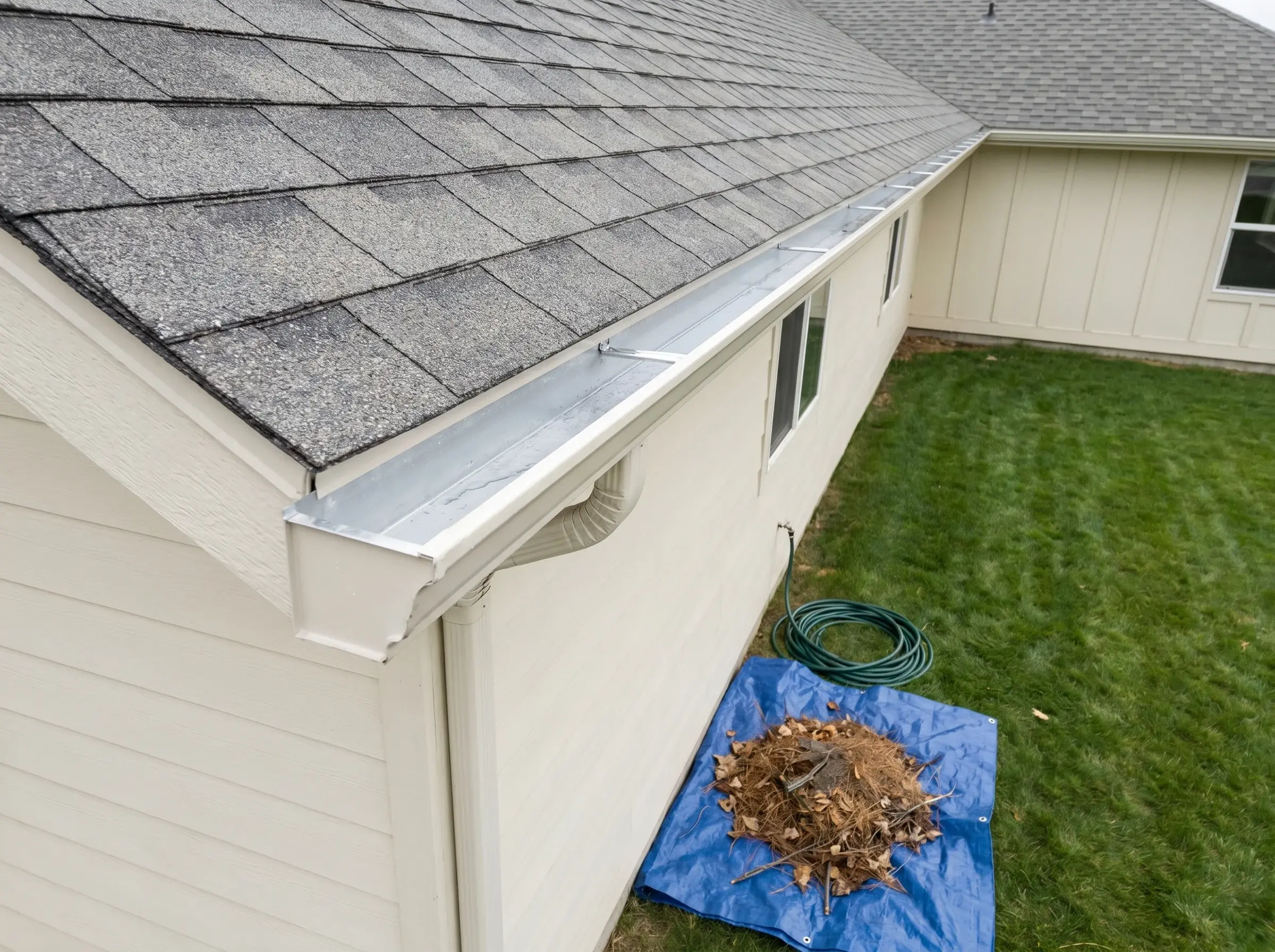
- Clear gutters and downspouts so meltwater has somewhere to go in the first place. A clogged gutter is a dam by itself before the freeze starts.
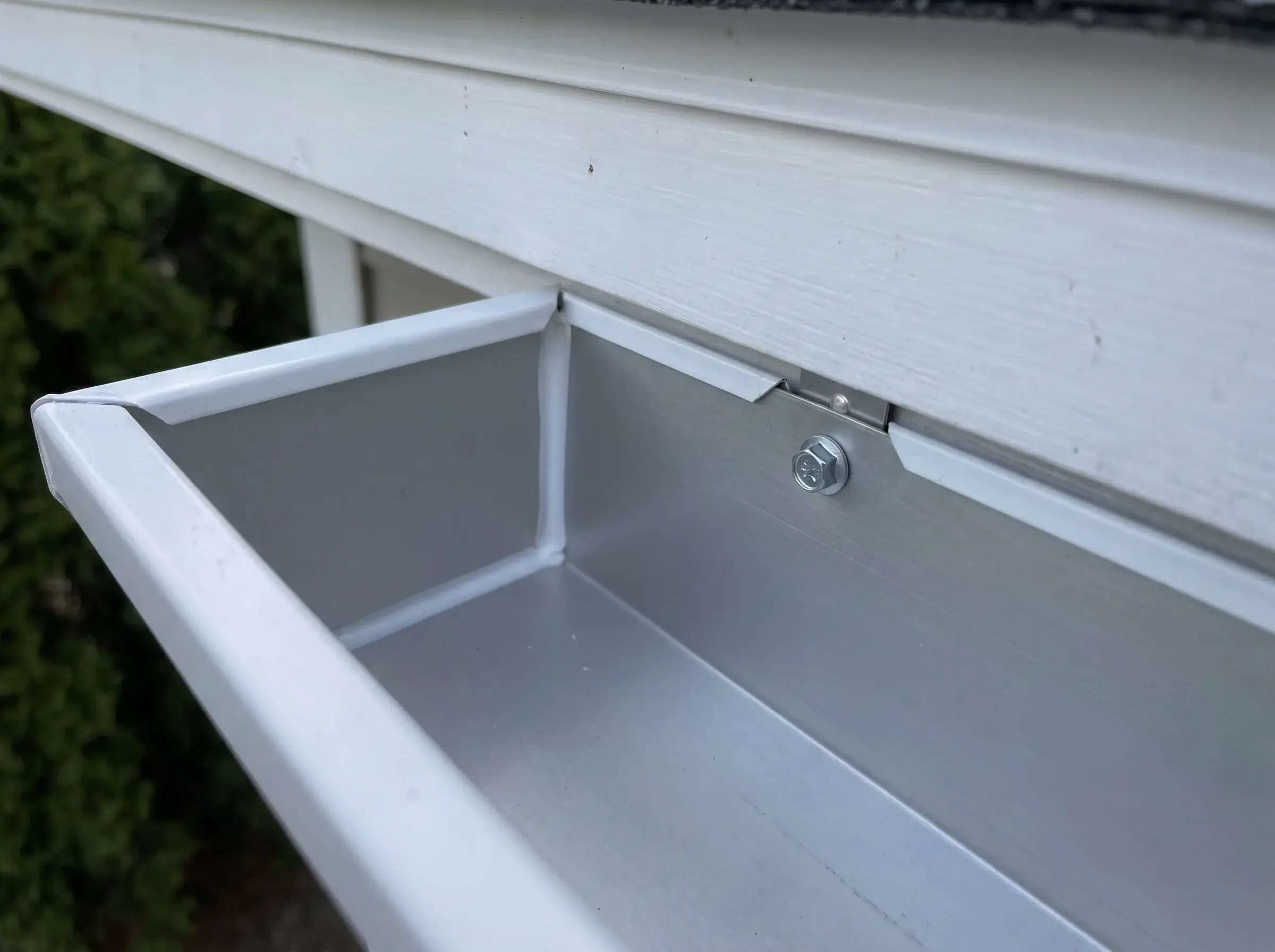
- Correct gutter pitch so water actually drains rather than sitting in low spots and freezing first.
- Assess attic insulation. This is the root cause for most homes. If the attic isn't holding heat inside the conditioned space, the roof deck stays cold and snow melts evenly from sun, not from heat loss.
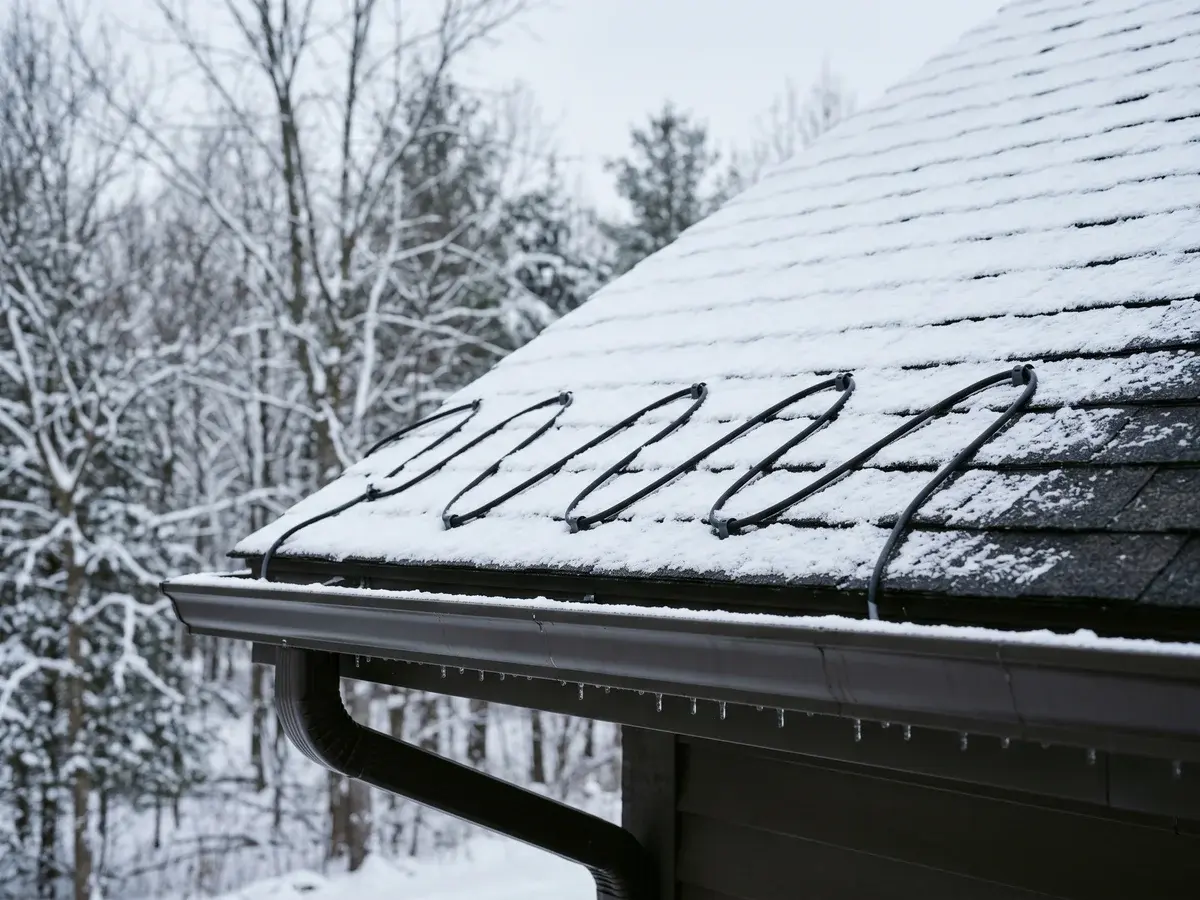
- Install self-regulating heat cable in chronic runs where geometry guarantees the problem will recur regardless of insulation (north-facing valleys, low-slope eaves, complex roof intersections).
- Add gutter guards to keep the underlying drainage system from re-clogging and resetting the cycle.
Section
What gutter work alone can solve
Some ice-dam situations are genuinely a gutter problem and nothing else. Specifically:
- Gutters clogged with leaves or pine needles from a skipped fall cleaning. Clear them and the dam doesn't form.
- Gutters pitched wrong so water pools in low spots and freezes before it reaches the downspout. Re-pitch and the runoff moves.
- Downspouts blocked at the elbow so water backs up the vertical leg and freezes in the gutter. Flush and the system drains.
- Undersized downspouts that can't keep up with meltwater volume during a warm afternoon. Upsize from 2x3 to 3x4 and the bottleneck goes away.
Section
What requires attic insulation
Honest disclosure: we install gutters and gutter guards. We don't install attic insulation. But if we see signs of an insulation-driven ice dam (uneven snow melt patterns on the roof, warm spots above the soffit, ice forming despite clean gutters), we'll tell you, and we'll tell you to get an insulation contractor's assessment before spending money on gutter changes that won't fix the root cause. Adding insulation in the right place is often the single highest-ROI move for a chronic ice-dam home.
Want this handled by a local crew?
Free on-site estimate across the Treasure Valley — call or send a few details and we'll get back the same day.
Section
Self-regulating heat cable: when it's worth it
Heat cable is the right answer for roof geometries that will dam regardless of insulation: usually north-facing valleys, low-slope eaves, and complex roof intersections on custom homes. The key word is self-regulating. Self-regulating cable adjusts its output based on temperature: more heat in deep cold, less heat when warmer. Old-style constant-wattage heat tape runs at full output the entire time it's energized. It works, but the electric bill is brutal and the cable degrades faster. If you're installing heat cable in 2026, install self-regulating. It's part of our ice dam prevention service in Boise, and only on the runs that need it.
Section
What NOT to do
Some ice-dam fixes are worse than the dam itself. Specifically:
- Constant-wattage heat tape. Outdated, expensive to run, and degrades fast in Idaho winters.
- Silicone caulk repairs to leaking gutters in winter. Silicone hardens and pulls away from cold aluminum within weeks. Wait for above-freezing temperatures and use butyl-based gutter sealant.
- Aggressive roof raking. A roof rake is fine for removing the bottom three or four feet of snow before a freeze, but raking off the top of the snowpack while leaving the bottom layer compacted can damage shingles and create exactly the ice ridge you're trying to prevent.
- Salt or ice-melt on the roof. Even shingle-safe products stain, degrade shingles over a few seasons, and drain into landscaping. Don't.
- Chiseling ice off the gutter with a hammer. Bends the front lip, breaks end caps, and rarely solves the actual blockage.
Section
Timing: when to address it
Ice-dam prevention work needs to happen before the first hard freeze, not in the middle of January when the dam is already there. The sequence:
- October to early November: schedule the fall gutter cleaning and any pitch corrections or downspout work. The median first 32°F night at the Boise airport is October 21.
- Early November: last call for heat cable installation before consistent freezing temperatures arrive.
- Mid-November onward: too late for sealant work (it won't cure properly in the cold). Save non-emergency repairs for spring.
- January and February: emergency response only. If a dam is already forming and water is entering the house, we steam-melt and clear; we don't try to re-pitch or reseal in active winter conditions.
Section
Treasure Valley neighborhoods most at risk
Some areas dam more than others because of housing stock, elevation, or roof geometry. The pattern we see year after year:
- Bench pre-1980 homes with low attic R-value — most common ice-dam call we get in central Boise.
- North End historic homes with original insulation that meets 1925 code and nothing since.
- Foothills and Hidden Springs at elevation — colder sustained temperatures hold snow on the roof longer.
- Eagle and Star custom homes with multi-gable rooflines — valleys concentrate meltwater into narrow runs at the eave.
- Older Caldwell and Middleton farmhouses with steep simple rooflines but minimal attic ventilation.
Metal roofs and steep roofs over entries add a second winter problem: snow that slides off in a sheet and pulls the gutter with it. That's a different fix, covered in snow guards vs gutter guards.
Section
Sources
- NOAA NCEI U.S. Climate Normals 1991–2020, Boise Air Terminal (USW00024131), annual/seasonal normals — https://www.ncei.noaa.gov/data/normals-annualseasonal/1991-2020/access/USW00024131.csv
- U.S. DOE Building America Solution Center (PNNL) — Construct Roofs and Attics for Ice Dam Prevention — https://basc.pnnl.gov/resource-guides/construct-roofs-and-attics-ice-dam-prevention
FAQ
Common questions on this topic.
Are ice dams really a gutter problem?
Will gutter guards stop ice dams?
Is heat cable expensive to run?
Can I just knock the ice out of the gutter when it forms?
How much does ice dam prevention cost?
When should I get an ice-dam assessment?
About the author
Mark
Owner· Licensed Idaho Contractor RCE-6681702
Mark owns Boise Gutter Guards, a licensed Idaho contractor (RCE-6681702) serving Boise, Meridian, Eagle, Nampa, Caldwell, Kuna, Star, and Garden City. He started the company after seeing too many Treasure Valley homeowners get sold under-sized gutters, nailed-on hangers, and silicone-sealed seams that fail in the first hard freeze. Every estimate is done in person, every install is backed in writing, and every customer gets a job-site walkthrough before the crew leaves.