Snow guards and gutter guards get searched as if they were the same product. They aren't. A snow guard is a pad or bar fastened to the roof that holds snow in place so it melts off gradually instead of sliding off in a sheet. A gutter guard covers the gutter so leaves and needles stay out while water gets in. In a Boise winter, most homes need a well-hung gutter and, where there are trees, a gutter guard. Metal roofs and steep roofs over doors or driveways are where snow guards come in.
Section
What is a snow guard?
Snow guards are roof-mounted retention devices, usually plastic or metal, installed in rows across the lower part of the roof. As one manufacturer puts it, they distribute the weight of accumulated snow and ice and keep it from sliding off in large, heavy chunks, which reduces the impact damage to gutters below. The same manufacturer's guidance is to install them in multiple rows up the slope rather than only in isolated spots above a door or vent.
Snow retention is roofing work, and on a metal roof it should follow the panel manufacturer's attachment method. We install and repair gutters and gutter guards; if your roof is shedding snow hard enough to damage them, we'll say so and point you to a roofer for the retention side.
Section
What does a gutter guard do in winter?
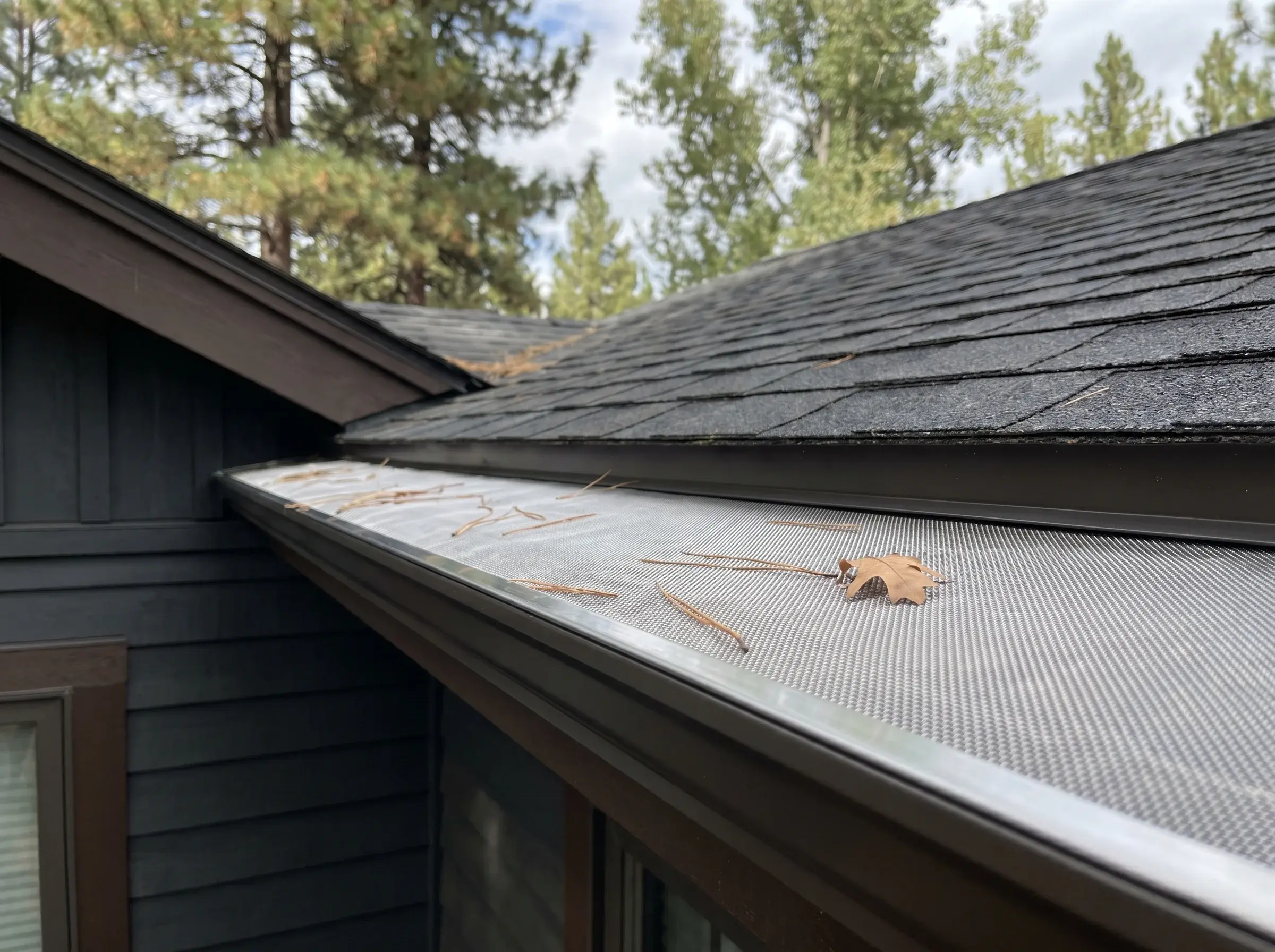
A gutter guard's winter job is keeping the channel open. Leaves and needles left in a gutter hold water, that water freezes, and the next afternoon's meltwater backs up behind it. Stainless micro-mesh keeps that debris out and sheds snowmelt through the screen. We rank the guard types for snow and ice in best gutter guards for Treasure Valley homes, and cover the winter caveats in do gutter guards work in Idaho winters.
What a gutter guard doesn't do is hold snow on the roof. Snow that slides off a metal roof passes over a guard the same way it passes over an open gutter, and a gutter hung too high takes the hit either way.
Section
How much snow does Boise actually get?
Less than people expect. NOAA's 1991–2020 normals for the Boise Air Terminal put average seasonal snowfall at 17.6 inches, with only about 6 days a year bringing an inch or more of new snow. What Boise has plenty of is cold: about 108 nights a year at or below freezing, but only about 16 days that stay below freezing all day. Most winter snow melts off in the afternoon and refreezes overnight.
| Measure | Normal | Why it matters for gutters |
|---|---|---|
| Seasonal snowfall | 17.6 in | Modest totals; big roof avalanches are uncommon on valley-floor shingle roofs |
| Days with 1 in or more of new snow | About 6 | Snow events are short, so the load comes and goes |
| Nights at or below 32°F | About 108 | Constant refreezing of meltwater at the eave |
| Days that stay below 32°F | About 16 | Most days thaw, which keeps the freeze-thaw cycle running |
| Snowiest months | Dec 5.6 in, Jan 5.3 in | Gutters should be clean and secure before December |
That's the valley floor. Homes higher in the Foothills and at Hidden Springs hold snow longer, and that's where roof snow load and sliding snow become a bigger part of the gutter conversation.
Section
When does sliding snow tear gutters off?
Smooth metal roofs, steep pitches, and long uninterrupted roof planes let snow release in one sheet. If the gutter's front lip sits above the line of the roof, that sheet catches it and levers it off the fascia. Fine Homebuilding's guidance is to place the front lip below the projected roof plane, low enough that sliding snow won't tear it off yet high enough that rain doesn't overshoot it.
| Roof pitch | Front lip below roof plane |
|---|---|
| 5-in-12 | 3/4 inch |
| 7-in-12 | 1/2 inch |
| 12-in-12 | 1/4 inch |
The same source notes the front lip should sit about an inch lower than the back, so an overflow spills forward instead of down the fascia. On a new install, ask the contractor how they set gutter height against your roof's pitch; the answer tells you whether sliding snow was considered.
Want this handled by a local crew?
Free on-site estimate across the Treasure Valley — call or send a few details and we'll get back the same day.
Section
How do you keep gutters on the house through snow and ice?
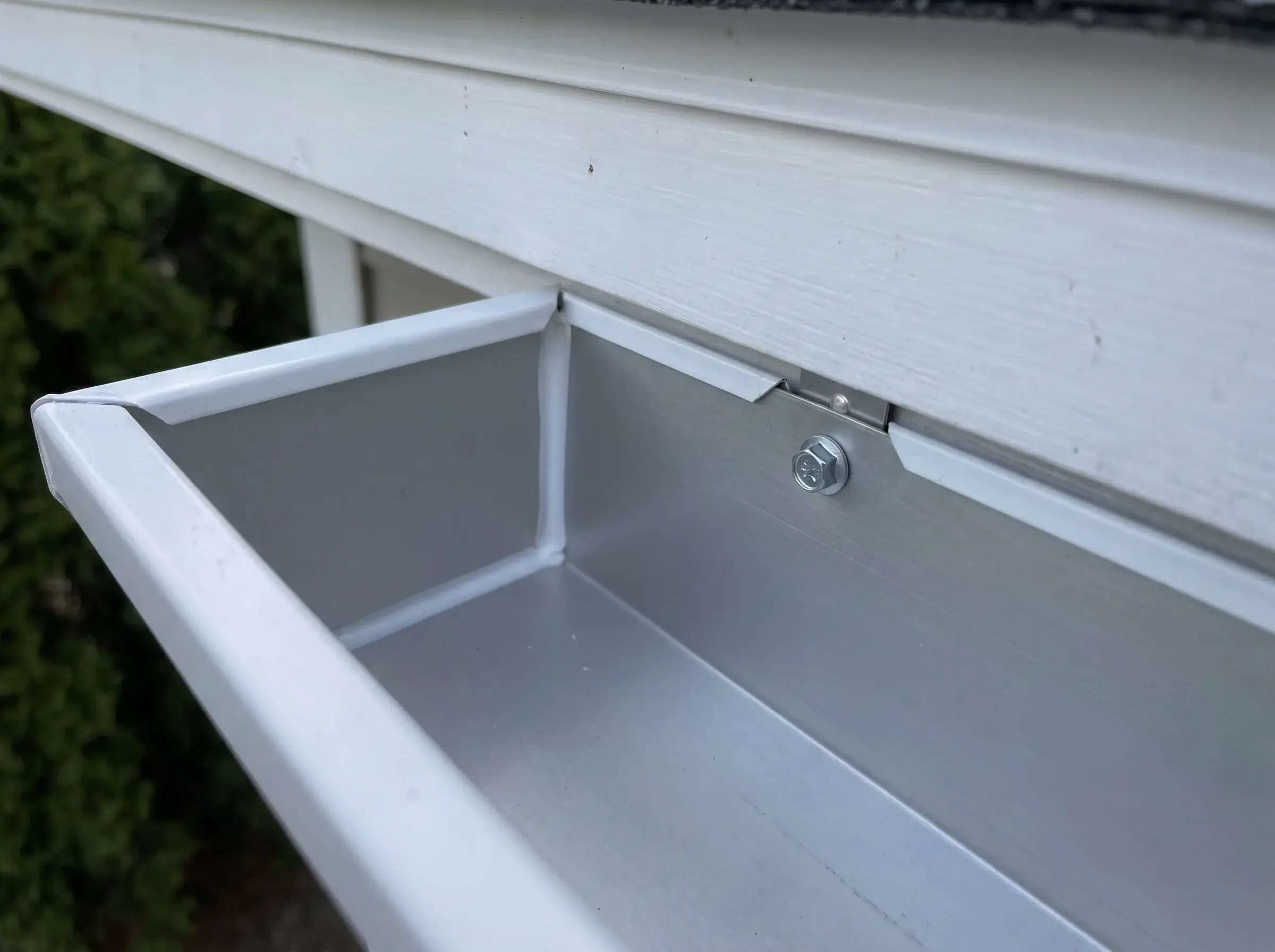
- Screwed hidden hangers every 24 inches into rafter tails or solid fascia. Nails back out of dry fascia; screws hold under ice weight.
- Heavy-duty snow-load hangers on Foothills and elevation homes that hold snow longer.
- Gutter height set below the roof plane for the pitch, especially under metal roofs.
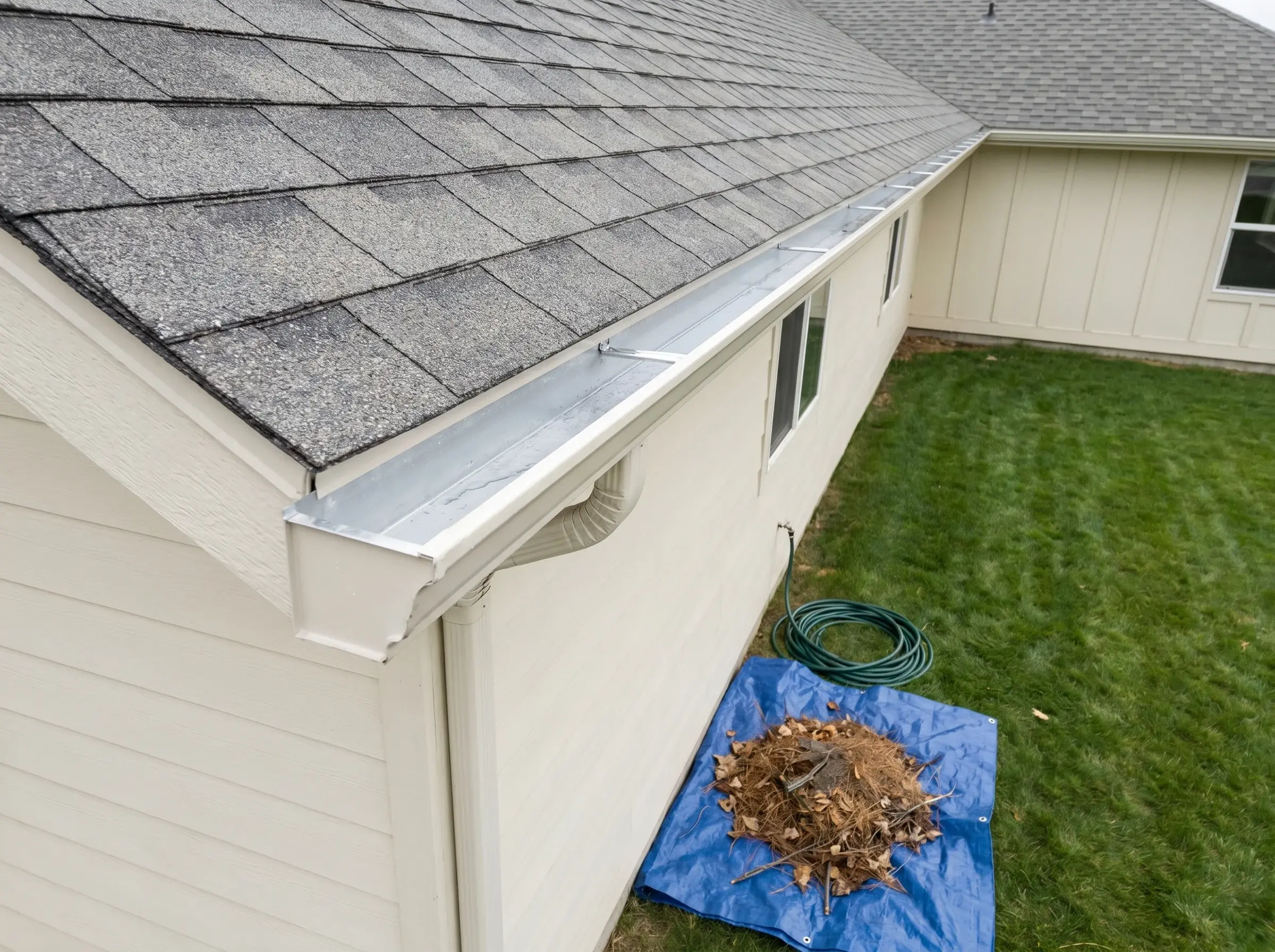
- Clean gutters before December, so meltwater drains instead of freezing into a plug. See fall gutter cleaning in Boise for timing.
- Stainless micro-mesh where trees overhang the roof, so the channel stays open all winter.
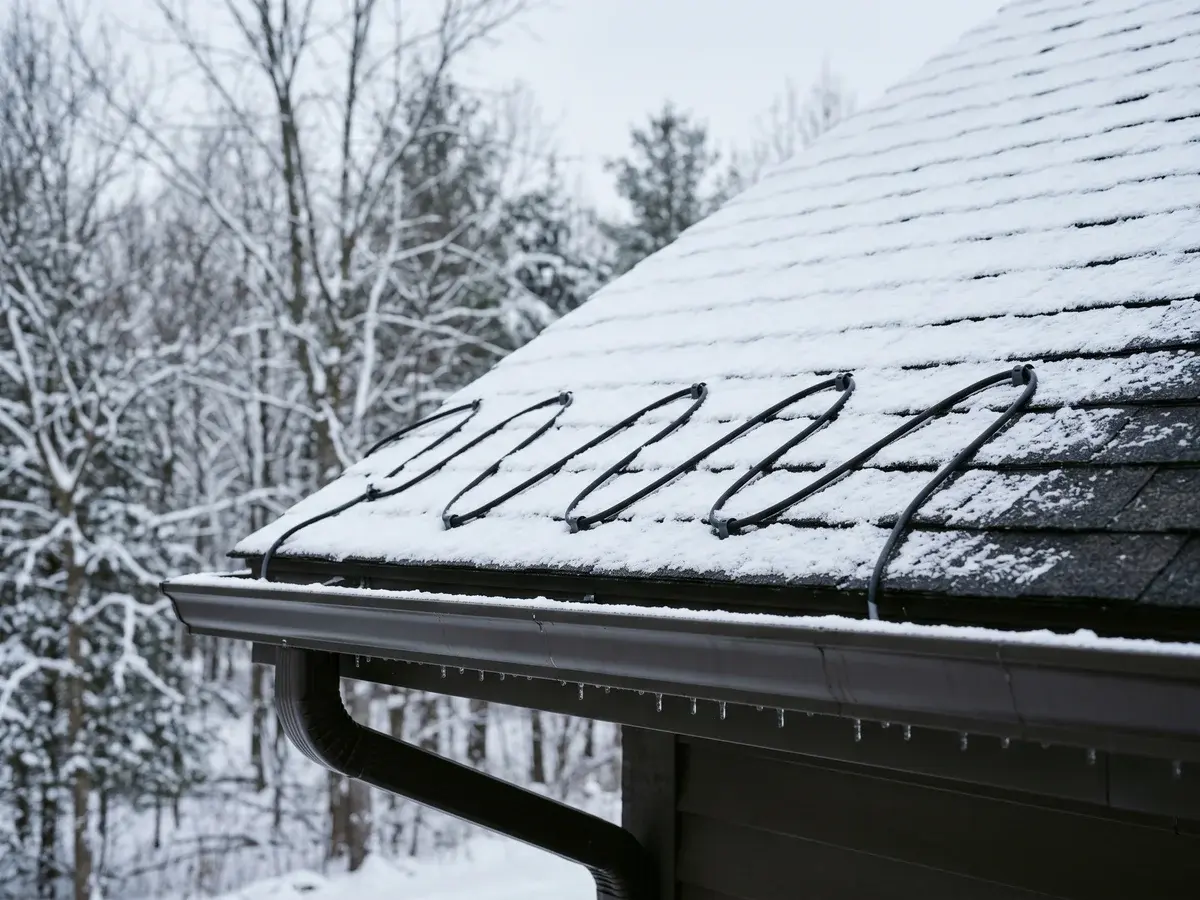
- Self-regulating heat cable only on chronic north-facing or shaded runs, as part of ice dam prevention in Boise.
- Snow retention from a roofer on metal roofs and steep roofs over entries, walkways, and driveways.
Section
Do gutter guards cause ice dams?
No. The U.S. Department of Energy's Building America Solution Center explains that ice dams occur when there is snow on the roof and the roof deck under it gets above freezing; meltwater runs down to the colder eave and refreezes. A gutter guard adds no heat to the roof deck. Its fix list is air sealing the ceiling, insulating the attic, and ventilating the roof. Clogged gutters make ice worse, which is why guards help; they just can't fix a warm attic. Our full breakdown is in how to stop ice dams on Idaho homes.
Section
What should you do after a heavy snow?
- Stay off the roof. Pull the bottom few feet of snow with a roof rake from the ground if ice is building at the eave.
- Don't chip ice out of the gutter. Hammering bends the front lip and breaks end-cap seals.
- Walk the perimeter after the thaw and look for sections sagging or pulled away from the fascia.
- Watch for water stains near the top of exterior walls or window casings; that means water is getting past the shingles.
- If a section is hanging or an active leak is reaching the house, call for gutter repair in Boise or see our emergency gutter repair page.
We hang and repair gutters for snow country across the Treasure Valley, from Boise gutter installation and repair to Eagle, Hidden Springs, and Emmett. Call (208) 247-2660 or request a free estimate, and mention your roof type; it changes what we recommend.
Section
Sources
- NOAA NCEI U.S. Climate Normals 1991–2020, Boise Air Terminal (USW00024131), annual/seasonal normals — https://www.ncei.noaa.gov/data/normals-annualseasonal/1991-2020/access/USW00024131.csv
- NOAA NCEI U.S. Climate Normals 1991–2020, Boise Air Terminal, monthly normals — https://www.ncei.noaa.gov/data/normals-monthly/1991-2020/access/USW00024131.csv
- Fine Homebuilding — Sloping and Placing Gutters (front-lip height below the roof plane by pitch) — https://www.finehomebuilding.com/project-guides/roofing/sloping-and-placing-gutters
- U.S. DOE Building America Solution Center (PNNL) — Construct Roofs and Attics for Ice Dam Prevention — https://basc.pnnl.gov/resource-guides/construct-roofs-and-attics-ice-dam-prevention
- SnoBlox-Snojax (snow guard manufacturer) — Do Snow Guards Protect Gutters? — https://snoblox-snojax.com/blog/do-snow-guards-protect-gutters/
FAQ
Common questions on this topic.
What is the difference between a snow guard and a gutter guard?
Do I need snow guards on a shingle roof in Boise?
Will gutter guards hold snow on my roof?
Can sliding snow pull gutters off the house?
Do gutter guards cause ice dams?
About the author
Mark
Owner· Licensed Idaho Contractor RCE-6681702
Mark owns Boise Gutter Guards, a licensed Idaho contractor (RCE-6681702) serving Boise, Meridian, Eagle, Nampa, Caldwell, Kuna, Star, and Garden City. He started the company after seeing too many Treasure Valley homeowners get sold under-sized gutters, nailed-on hangers, and silicone-sealed seams that fail in the first hard freeze. Every estimate is done in person, every install is backed in writing, and every customer gets a job-site walkthrough before the crew leaves.