The short version: if your gutters are seamless aluminum, hold their shape across most of the run, and have one or two isolated leaks at a miter or end cap, repair is almost always the right call and lands in the $200–$900 range. If they're sectional, leak at multiple seams, show corrosion or widespread sagging, or were installed with nails that have worked loose, full replacement usually saves money over a multi-year horizon. The honest answer for your specific home comes from walking the full perimeter — not from the one section you noticed dripping.
This guide gives you a contractor's decision framework: the five-question quick check, the signs that point clearly toward repair, the signs that point clearly toward replacement, and how local conditions across the Treasure Valley shift the math. Read it before the estimate so you can ask the right questions when the contractor walks your roof.
Section
Signs you should repair
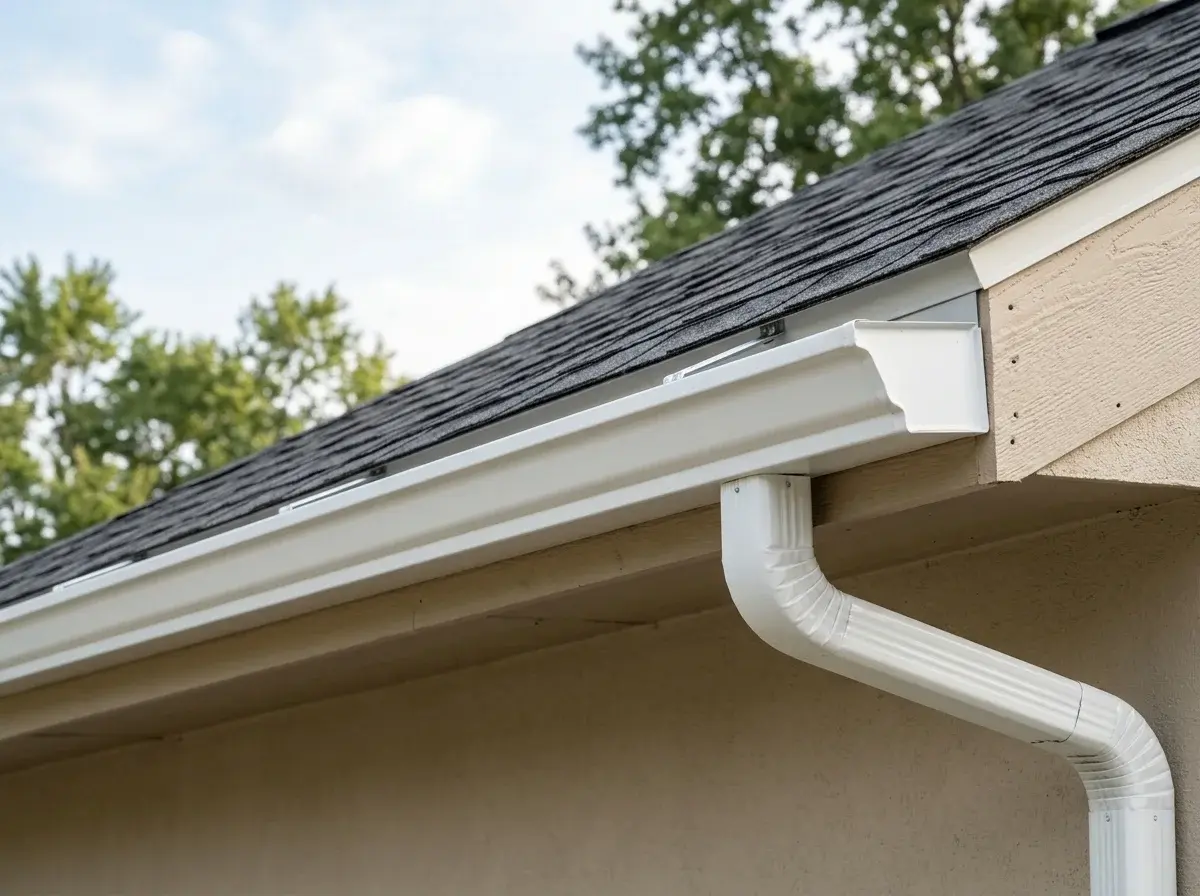
- The system is seamless aluminum (you can only see joints at inside/outside corners and downspout outlets, not every 10 feet across the flat span).
- Leaks are isolated — one or two miters, a single end cap, one downspout outlet. Not seven different drips in seven places.
- The gutter holds its shape across the full run. No visible sagging, no pulled-away sections.
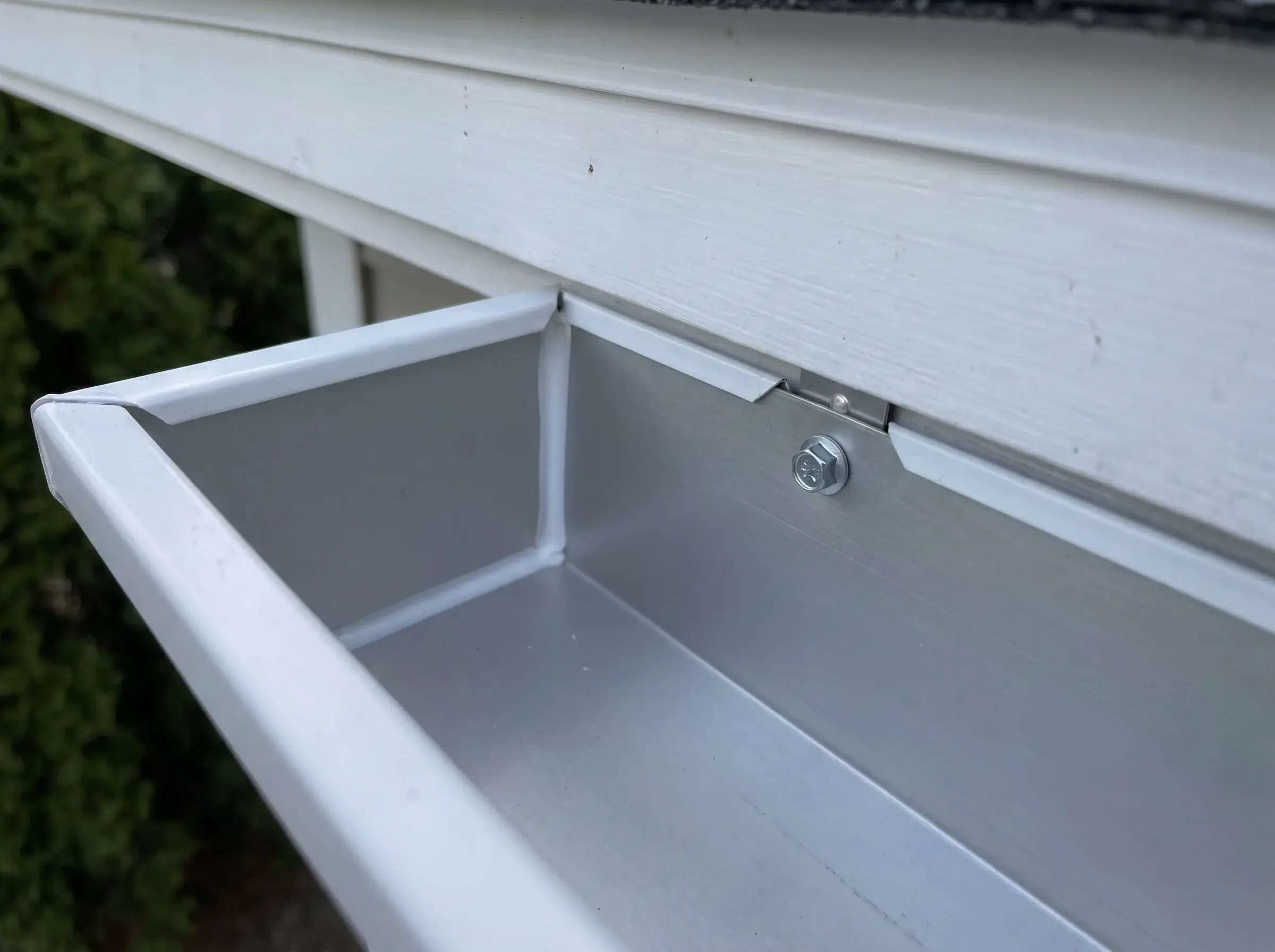
- Fasteners are hidden-hanger screws (not nails). Screws can be tightened, replaced, or supplemented; nails that have worked loose are a deeper problem.
- The fascia behind the gutter is solid wood, not soft or rot-stained.
- The system is less than 20–25 years old and the metal itself shows no corrosion or pinhole leaks.
Section
Signs you should replace
- The system is sectional (10-foot pieces joined with slip connectors and caulked seams). Once one joint fails on a sectional system, the others are usually weeks or months behind — chasing each seam is rarely economical.
- Multiple sagging sections. A single sag can be re-hung; three or four across the system usually means the original install was undersized or the fascia is failing.
- Visible corrosion, pinholes, or metal fatigue cracks. Sealant fixes the joint; nothing fixes a hole in the metal.
- Original install used nails into fascia (common on pre-2010 production builds) and the fasteners are pulling loose across the home — most common in Caldwell, Nampa, Middleton, and Mountain Home where wind is consistent.
- Undersized for the actual roof load — 4-inch gutters on a home that should have 5-inch, or 5-inch on a steep-pitch Foothills home that really needs 6-inch with 3x4 downspouts.
- System is over 25 years old and you're seeing the third or fourth issue this year.
Section
The age and material question
Material and age together tell you a lot before anyone climbs a ladder. The table below is a rough guide — it's not absolute, but it sets expectations for the on-site visit.
| Material / type | Age | Typical recommendation |
|---|---|---|
| Seamless aluminum | Under 15 years | Repair almost always wins |
| Seamless aluminum | 15–25 years | Repair if isolated; replace if widespread |
| Seamless aluminum | 25+ years | Replacement often economical |
| Sectional aluminum | Any age past initial seal failure | Replacement usually wins long-term |
| Galvanized steel | 20+ years | Replacement — corrosion is system-wide |
| Copper (soldered) | Any age, isolated failure | Repair by re-soldering; copper systems last 50+ years |
| Vinyl | Any age with cracking or UV failure | Replacement; vinyl doesn't hold up to Idaho UV |
Section
Why isolated leaks aren't always a 'just repair'
An isolated leak can be a symptom of a larger system issue. A miter that's dripping because the sealant failed is a simple reseal. The same miter dripping because the gutter has gone off-pitch and water is pooling against the corner is a symptom that the hangers are failing across the run — and resealing the corner without re-pitching the section will produce the same leak again next season. The diagnostic walkaround matters more than the fix itself. A contractor who shows up, reseals the obvious corner, and leaves without checking pitch, fasteners, and downspout flow on the rest of the system is setting you up for a callback.
Want this handled by a local crew?
Free on-site estimate across the Treasure Valley — call or send a few details and we'll get back the same day.
Section
Cost considerations
Repair visits in the Treasure Valley typically run $200–$900 per visit, with $450 typical for an isolated fix — resealing a miter, re-hanging a sagged section, or replacing a downspout. Multi-section work and downspout re-routing run higher. Full seamless aluminum replacement falls in the $10–$22 per linear foot range, with $14 per linear foot typical, so a mid-size single-story home typically lands between $1,600 and $4,400. The decision math is straightforward: if repair costs add up to more than a third of the replacement cost over two or three years, replacement is usually the better long-term investment. Our cost calculator at /cost-calculator gives ranged estimates for both paths so you can see the numbers side by side before the on-site visit.
Section
Repair-first scenarios in the Treasure Valley
Some of the most common repair-first calls we run in the valley:
- Pulled-fastener sections after a Caldwell or Nampa windstorm — re-hang with screws into solid fascia and the system is back in service for years.
- Ice-pulled section on a Bench or North End home — winter ice load yanked one run off-level; re-pitching and adding hangers solves it without touching the rest of the system.
- Hail dent on a Nampa or Caldwell front lip — if the dent affects flow but the metal isn't pierced, the section can sometimes be reshaped or replaced individually without redoing the whole run.
- Single failed end cap on a Boise Foothills home — resealing with butyl (not silicone) and confirming the cap is mechanically tight handles it.
- Downspout outlet leak — usually a sealant fix on a seamless system; sometimes a replacement outlet on older or damaged sections.
- Sagged section over a Garden City entry — one set of pulled hangers, no widespread issue. Re-hang with screws and re-pitch.
Section
Replacement scenarios
When replacement is clearly the right call:
- 1950s–70s Bench or North End home with original 4-inch sectional gutters — joint sealant has failed across the system, the gutters are undersized for the roof, and chasing each leak costs more than starting fresh with seamless.
- Meridian or West Boise production home at year 20–30 — builder-grade gutters with nailed hangers are reaching end-of-life across most of the system. Re-fastening every run with screws costs more than replacement, and you still have undersized downspouts.
- Any full sectional system with three or more leaking joints. Sectional gutters fail at the joints, and once two or three have gone, the rest are usually weeks or months behind.
- Custom home with the wrong profile — 5-inch gutters on a steep-pitch multi-gable that should have been 6-inch with 3x4 downspouts. Upsizing is a replacement job, not a repair.
- Corroded steel gutters of any age. There's no economical way to repair through-rust.
- After major hail damage that's denting and piercing across multiple runs — typically an insurance claim, and replacement is the appropriate scope.
Section
Sources
- This Old House — Seamless Gutters Cost — https://www.thisoldhouse.com/gutters/seamless-gutters-cost
- HomeAdvisor — Install Gutters and Downspouts Cost — https://www.homeadvisor.com/cost/gutters/install-gutters-and-downspouts/
FAQ
Common questions on this topic.
How do I know if my gutters can be repaired or need replacing?
Is it ever cheaper to replace than to repair?
What's the typical life of an aluminum gutter system?
Will my insurance cover gutter replacement?
Can I repair gutters myself?
If I'm replacing anyway, should I add gutter guards in the same visit?
About the author
Mark
Owner· Licensed Idaho Contractor RCE-6681702
Mark owns Boise Gutter Guards, a licensed Idaho contractor (RCE-6681702) serving Boise, Meridian, Eagle, Nampa, Caldwell, Kuna, Star, and Garden City. He started the company after seeing too many Treasure Valley homeowners get sold under-sized gutters, nailed-on hangers, and silicone-sealed seams that fail in the first hard freeze. Every estimate is done in person, every install is backed in writing, and every customer gets a job-site walkthrough before the crew leaves.