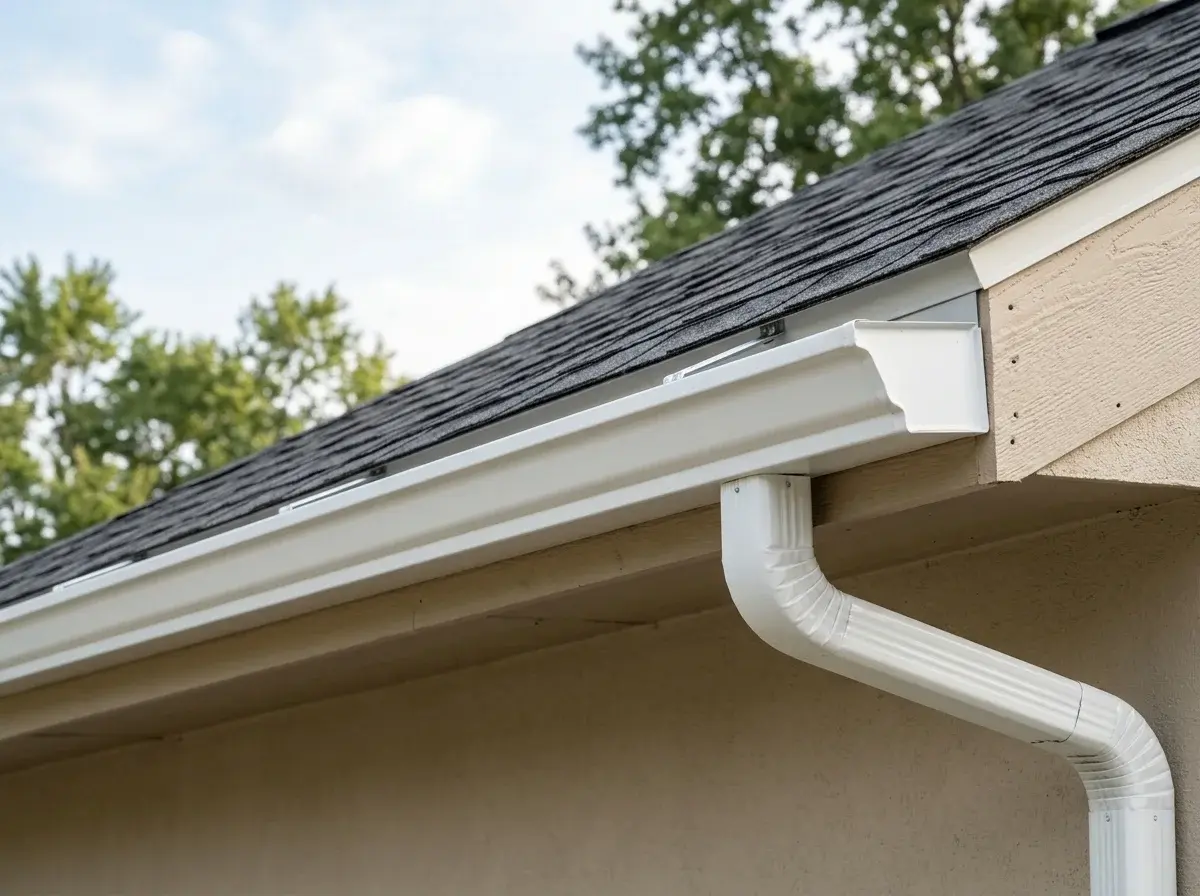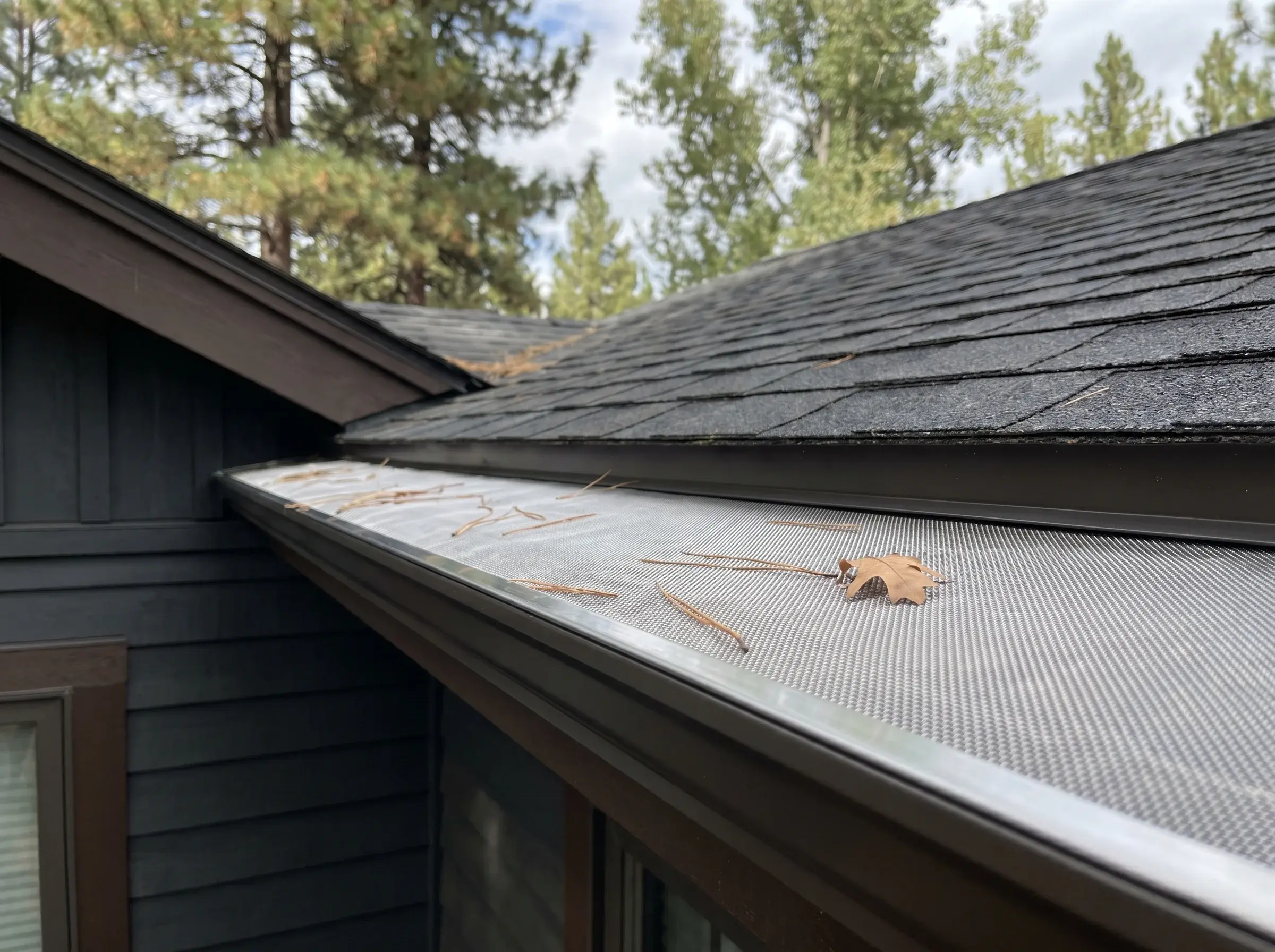
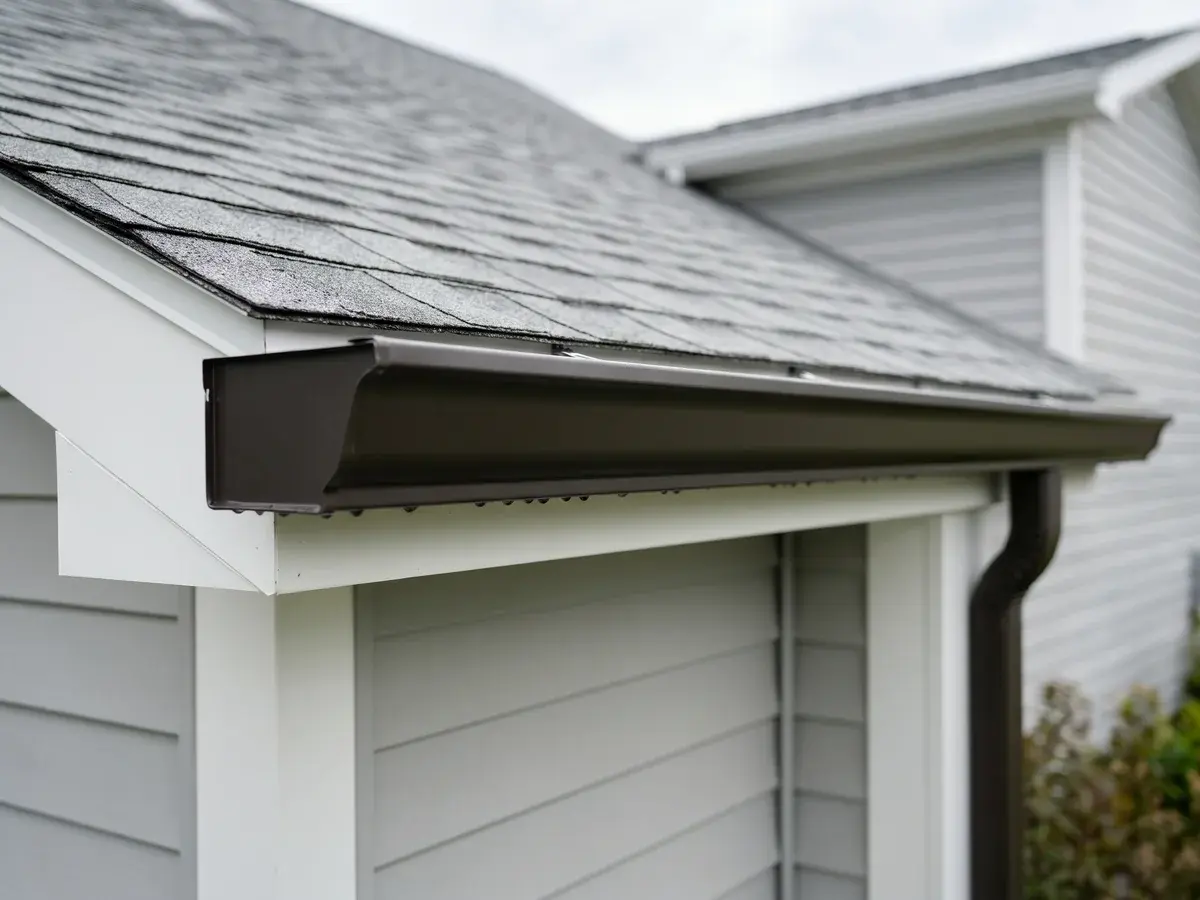
Short answer: for most Treasure Valley homes, yes — seamless gutters are worth the extra money, and the reason has almost nothing to do with looks. Gutters don't usually fail in the middle of a run. They fail at the joints. Sectional gutters are built from pre-cut pieces snapped together every ten feet or so, and every one of those seams is a future leak. Seamless gutters are rolled from a single continuous coil on-site, so the only joints are at the corners and downspout outlets.
That difference matters more here than in a wetter climate, and not for the reason you'd guess. Boise only gets about 11.7 inches of precipitation a year — roughly a third of the U.S. average, per NOAA's 1991–2020 normals for the Boise airport. We're semi-arid. But that water arrives concentrated in winter and spring, on top of repeated freeze-thaw cycling, and freeze-thaw is exactly what pries sectional joints apart over time. Water seeps into a seam, freezes, expands, and widens the gap a little more each winter.
Section
What's the real difference between seamless and sectional?
Sectional gutters come in standard lengths from the home-improvement store and join together with connectors, slip joints, and sealant. Seamless gutters are extruded from a coil of aluminum (or copper) through a portable roll-forming machine parked in your driveway, cut to the exact length of each run. The practical upshot is joints: a sectional system has a connector roughly every ten feet down every run, while a seamless system has joints only where it physically has to turn a corner or drop into a downspout.
Fewer joints means fewer places for water to escape, fewer places for debris to catch, and fewer sealant lines to dry out and crack. That's the entire case for seamless, and it's a structural fact rather than a marketing claim — you can count the connectors on each system yourself.
| Factor | Seamless aluminum | Sectional aluminum |
|---|---|---|
| Joints along each run | None — only at corners + downspouts | Connector roughly every 10 ft |
| Typical lifespan | 20–30 years | 10–15 years |
| Leak risk over time | Low — few seams to fail | Higher — every joint is a candidate |
| Installation | Pro-only (roll-formed on-site) | DIY-friendly |
| Upfront cost | Higher (~30–50% more) | Lower |
| Best for | Homes kept long-term; full-perimeter replacement | Short holds, outbuildings, single-run fixes |
Lifespan figures here track This Old House's 2026 cost guide, which puts seamless aluminum at 20–30 years against 10–15 for sectional. Your mileage varies with gauge, install quality, and debris load — a Foothills home under pine will age any gutter faster than a valley-floor home with no canopy.
Section
What do seamless gutters cost in the Treasure Valley?
Installed seamless aluminum generally runs in the range of $4 to $9 per linear foot, according to This Old House's 2026 figures — a band HomeAdvisor's 2025 gutter-cost data also reflects — with copper a different conversation entirely at roughly $15 to $25 per foot. Sectional aluminum sits at the low end of that range, and the gap is the labor and equipment of on-site roll-forming. For a typical single-story Treasure Valley home, that translates to a few hundred dollars of difference over the whole job — real money, but small next to what a failed gutter can cost a foundation.
We don't publish a flat per-foot price because the honest number depends on stories, roofline complexity, corners, downspout count, and whether the fascia needs work first. Run your specifics through the cost calculator at /cost-calculator for a ranged estimate, then we confirm it with an on-site measure. For the longer comparison, our breakdown at /resources/seamless-vs-sectional-gutters lays the two systems side by side.
Section
Are seamless gutters worth the extra money in Boise's climate?
This is where the semi-arid climate flips the usual logic. You'd think a dry place needs less gutter. But the Treasure Valley's water shows up in the worst possible way for sectional joints: as snowmelt and ice during the freeze-thaw months. The National Weather Service defines a freeze at 32°F and a hard freeze at 28°F, and Boise cycles through both repeatedly each winter on top of roughly 18 inches of annual snowfall. Every freeze-thaw cycle works water deeper into a sectional seam and widens it. A seamless run has no seam there to attack.
A Meridian homeowner called us last spring with the classic version of this. Builder-grade sectional gutters, about eight years old, leaking at three connectors along the back of the house — right where snowmelt had been freezing and thawing in the joints every winter. The seams hadn't failed all at once; they'd crept open a winter at a time until the drips stained the patio. We replaced the back runs with seamless .032 aluminum. No joints to leak, no annual resealing, done.
Want this handled by a local crew?
Free on-site estimate across the Treasure Valley — call or send a few details and we'll get back the same day.
Section
How long do seamless gutters last in Idaho?
Properly installed seamless aluminum routinely lasts 20 to 30 years in our climate — double the typical sectional service life. The aluminum itself doesn't rust, and with the joints removed, there's far less to go wrong. What actually ends a seamless gutter's life is usually physical: ice damage from an un-addressed ice dam, impact damage, or fascia rot underneath from a separate water problem. The gutter outlives the sealant-and-connector failure mode entirely.
Section
When is sectional actually the right call?
- You're selling within a year or two and just need the system watertight, not lifetime-grade.
- It's a detached garage, shop, or shed where appearance and longevity matter less.
- You're patching a single damaged run on an otherwise sound sectional system — matching sectional is cheaper than seaming in a one-off seamless length.
- It's a true DIY project and you don't have access to roll-forming. Seamless is pro-installed by definition; a capable homeowner can hang sectional.
Section
What should I look for in a seamless install?
- .032-inch aluminum coil rather than the lighter .027, for snow-load rigidity.
- Hidden hangers screwed into the fascia every 24 inches or closer, not spike-and-ferrule.
- Properly sized downspouts — 3×4 inch rather than 2×3 on homes with large or steep roofs that dump volume fast.
- Corners and outlets sealed with a quality gutter sealant, since those are the only joints in the whole system and the only places it can leak.
- Fascia inspected and repaired before hanging — a seamless gutter is only as sound as the wood it's screwed to.
- A licensed Idaho contractor; the RCE number belongs on the written estimate.
Section
Sources
- This Old House — Seamless Gutters Cost — https://www.thisoldhouse.com/gutters/seamless-gutters-cost
- Englert — Seamless Gutters Benefits — https://www.englertinc.com/articles/seamless-gutters-benefits
- NWS Boise Climate (rankings, normals, precipitation/snow extremes for Boise + Treasure Valley) — https://www.weather.gov/boi/climate
- USDA NRCS Official Series Description — ADA series (Clayey-skeletal, smectitic, mesic Typic Argixerolls; 25-55% clay; slow permeability) — https://soilseries.sc.egov.usda.gov/OSD_Docs/A/ADA.html
FAQ
Common questions on this topic.
How much more do seamless gutters cost than sectional?
Do seamless gutters really leak less?
How long do seamless gutters last in the Treasure Valley?
Can I install seamless gutters myself?
What gauge of aluminum should seamless gutters be in Idaho?
About the author
Mark
Owner· Licensed Idaho Contractor RCE-6681702
Mark owns Boise Gutter Guards, a licensed Idaho contractor (RCE-6681702) serving Boise, Meridian, Eagle, Nampa, Caldwell, Kuna, Star, and Garden City. He started the company after seeing too many Treasure Valley homeowners get sold under-sized gutters, nailed-on hangers, and silicone-sealed seams that fail in the first hard freeze. Every estimate is done in person, every install is backed in writing, and every customer gets a job-site walkthrough before the crew leaves.