When you see "Licensed Idaho Contractor RCE-XXXXXXX" on a quote, the prefix and the number aren't decoration. They're a regulatory identifier tied to a registered business, current insurance coverage, and a complaint history the state of Idaho keeps on file. Knowing how to read the license — and how to verify it — protects you from the small number of contractors who hope nobody actually checks.
Section
What the RCE prefix means
RCE is the prefix Idaho uses to identify registered contractors under the state's contractor registration program. The license type and prefix system organizes contractors so the state and the public can verify registration, scope, and standing. The number that follows the prefix is unique to that contractor — it's how the DOPL tracks insurance filings, renewal status, complaint history, and any disciplinary actions across the contractor's entire registration history. The whole identifier — letters plus number — should appear on every estimate, every invoice, every contract, and ideally on the company's trucks and business cards.
Section
Why Idaho requires it
Idaho's contractor registration system exists for consumer protection — full stop. The state requires registration so it can verify that contractors carry liability insurance, maintain a recorded business entity that can be served with legal documents, and operate within a complaint and dispute-resolution framework the public can use. None of those things guarantee good work. What they do is create a floor: a contractor who shows up at your house with a valid registration has, at minimum, demonstrated they meet the baseline requirements to operate. A contractor who can't or won't provide a registration number hasn't even cleared that floor — and there's no path to hold them accountable if something goes wrong.
Section
How to look up a contractor's license
- Go to the Idaho Division of Occupational and Professional Licenses (DOPL) license search on the state's official .gov domain.
- Enter the license number from the contractor's estimate, or search by business name if you don't have the number yet.
- Verify the license shows as Active (not Expired, Inactive, or Suspended).
- Confirm the registered business name matches what's on the quote and business card.
- Note any disciplinary actions or complaints listed in the public record.
- If anything doesn't match — name, status, prefix — pause before signing and ask the contractor to clarify in writing.
Section
What an active license tells you
- Liability insurance was current at the time of registration or renewal — the state requires proof to issue and renew.
- The business is registered with the state and can be served with legal documents at a known address.
- No unresolved disciplinary actions or unresolved complaints have closed the license.
- The contractor is accountable to the state regulatory board — there's a real path for complaints and dispute resolution.
- Renewal cycles have been kept current, which is a basic indicator the contractor is operating as an ongoing business rather than disappearing between jobs.
Section
What a license does NOT guarantee
An active license is necessary but not sufficient. It doesn't guarantee skill, integrity, or project-specific experience. A contractor with a valid registration can still do bad work, use cheap materials, miss the spec, or skip the water test. The license is the floor — everything in our "how to vet a gutter contractor" guide is what you check on top of the floor. Think of license verification as the first filter, not the only filter. If a contractor doesn't clear it, you stop there. If they do clear it, the real evaluation begins.
Want this handled by a local crew?
Free on-site estimate across the Treasure Valley — call or send a few details and we'll get back the same day.
Section
Unlicensed contractors: the actual risk
The price difference between licensed and unlicensed contractors looks attractive on the front end. The risk lands later, and the homeowner is the one carrying it.
- No insurance recourse if a worker is injured on your property — depending on circumstances, you can be named as a responsible party.
- No complaint process through DOPL — the lever you have with a licensed contractor doesn't exist with an unlicensed one.
- Some homeowner insurance policies exclude or limit coverage for damage caused by work done by unlicensed contractors. If the install causes water intrusion that damages drywall or flooring, you may be paying for the repair yourself.
- Permit and code issues — on jobs that require permits (gutter work usually doesn't, but related work like downspout-tied underground drains sometimes does), unlicensed work can create paper-trail problems at resale.
- No regulatory accountability — if the contractor disappears, there's no professional consequence and no easy way to find them.
Section
Our license: RCE-6681702
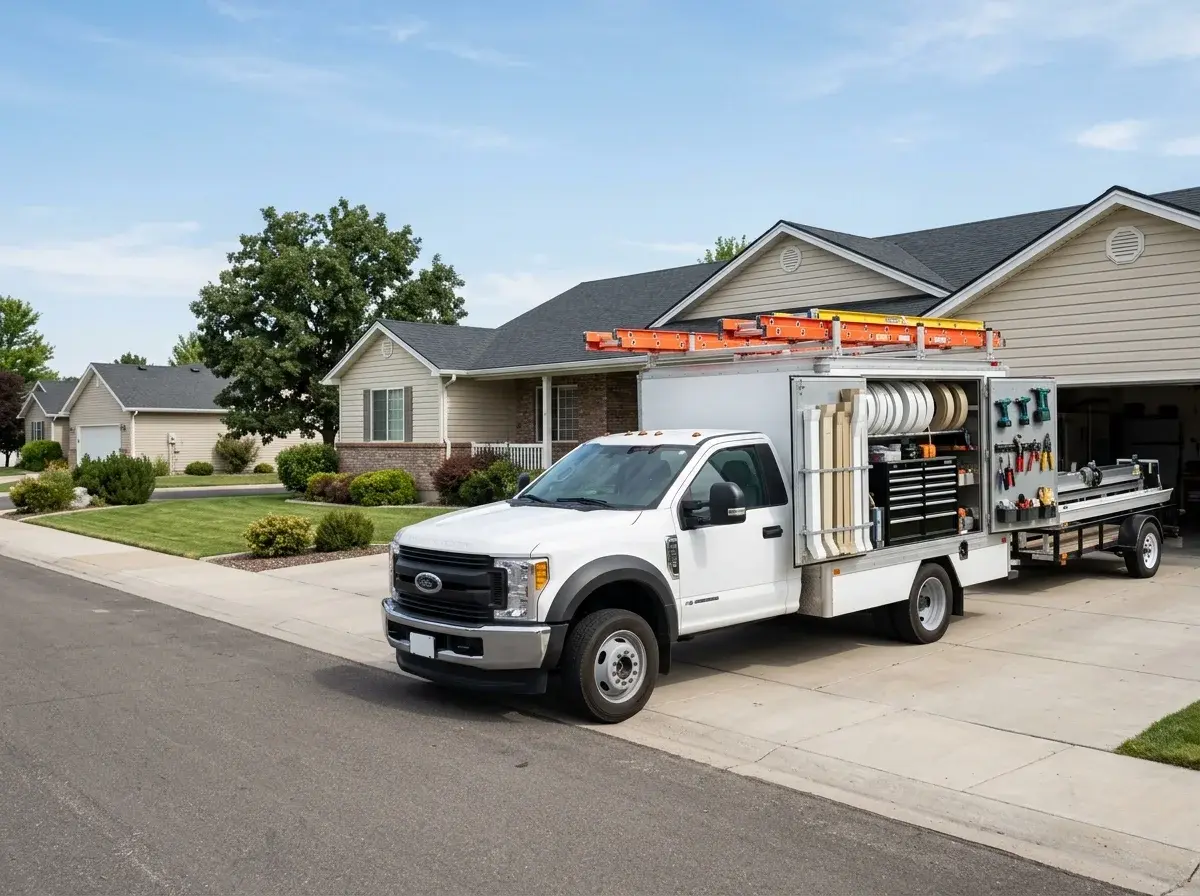
Boise Gutter Guards is registered under Idaho contractor license RCE-6681702. We put the number on every estimate, every invoice, every truck, every business card, and the footer of every page on this website. You can verify it through the DOPL license search before you sign anything — and we encourage you to. Verification confirms the registration is active, the business name matches, and there are no unresolved complaints on file. The license number being transparent and traceable is part of what "licensed Idaho contractor" actually means in practice.
Section
How license verification fits the hiring checklist
License verification is question one on the contractor vetting checklist for a reason — it's the fastest filter. Thirty seconds at the DOPL search tells you whether the contractor has cleared the regulatory floor. Once that's confirmed, the rest of the vetting questions (on-site measurement, written itemized quotes, workmanship warranty terms, fastener and sealant choices, water testing, no high-pressure close) come into play. Our full eight-question hiring checklist is at /blog/how-to-vet-gutter-contractor-idaho-checklist if you want to walk through the entire framework.
Section
Beyond the license: other credentials worth checking
- Manufacturer certifications — some gutter guard and gutter system manufacturers train and certify installers; that certification means the installer has met a product-specific standard.
- Better Business Bureau accreditation and rating — useful as one signal among many, especially the complaint resolution history.
- Local references — ask for two or three recent customers and actually call them. References on the contractor's website are curated; phone references are real.
- Google Business Profile reviews — tied to verified accounts and harder to fake than testimonials on a contractor's own website.
- Insurance certificate — for larger jobs, ask for a certificate of insurance naming you as an additional insured for the duration of the work.
Section
What to do if a contractor's license is inactive or expired
- Refuse to sign. An expired or inactive license at the time of contract signing is a deal-breaker, regardless of how compelling the rest of the quote looks.
- Ask the contractor to renew before quoting — if they're between renewals legitimately, the renewal should take days, not weeks.
- If the license shows as Suspended, walk away and don't engage further — suspension is a regulatory finding, not a paperwork delay.
- Report the issue to DOPL if the contractor was actively soliciting work with a suspended or expired license. The board uses those reports to manage their docket and protect other homeowners from the same situation.
- Get an alternate quote from a contractor with verifiable active registration before doing anything time-sensitive.
Section
Sources
- Idaho DOPL — Contractors Board (RCE registration + license search) — https://dopl.idaho.gov/con/
FAQ
Common questions on this topic.
Is an Idaho contractor license the same as a business license?
Does a higher license number mean a newer business?
What if a contractor claims to be "insured" but won't share a license number?
How long is an Idaho contractor license valid before renewal?
Can I file a complaint against an Idaho contractor after the job is done?
About the author
Mark
Owner· Licensed Idaho Contractor RCE-6681702
Mark owns Boise Gutter Guards, a licensed Idaho contractor (RCE-6681702) serving Boise, Meridian, Eagle, Nampa, Caldwell, Kuna, Star, and Garden City. He started the company after seeing too many Treasure Valley homeowners get sold under-sized gutters, nailed-on hangers, and silicone-sealed seams that fail in the first hard freeze. Every estimate is done in person, every install is backed in writing, and every customer gets a job-site walkthrough before the crew leaves.