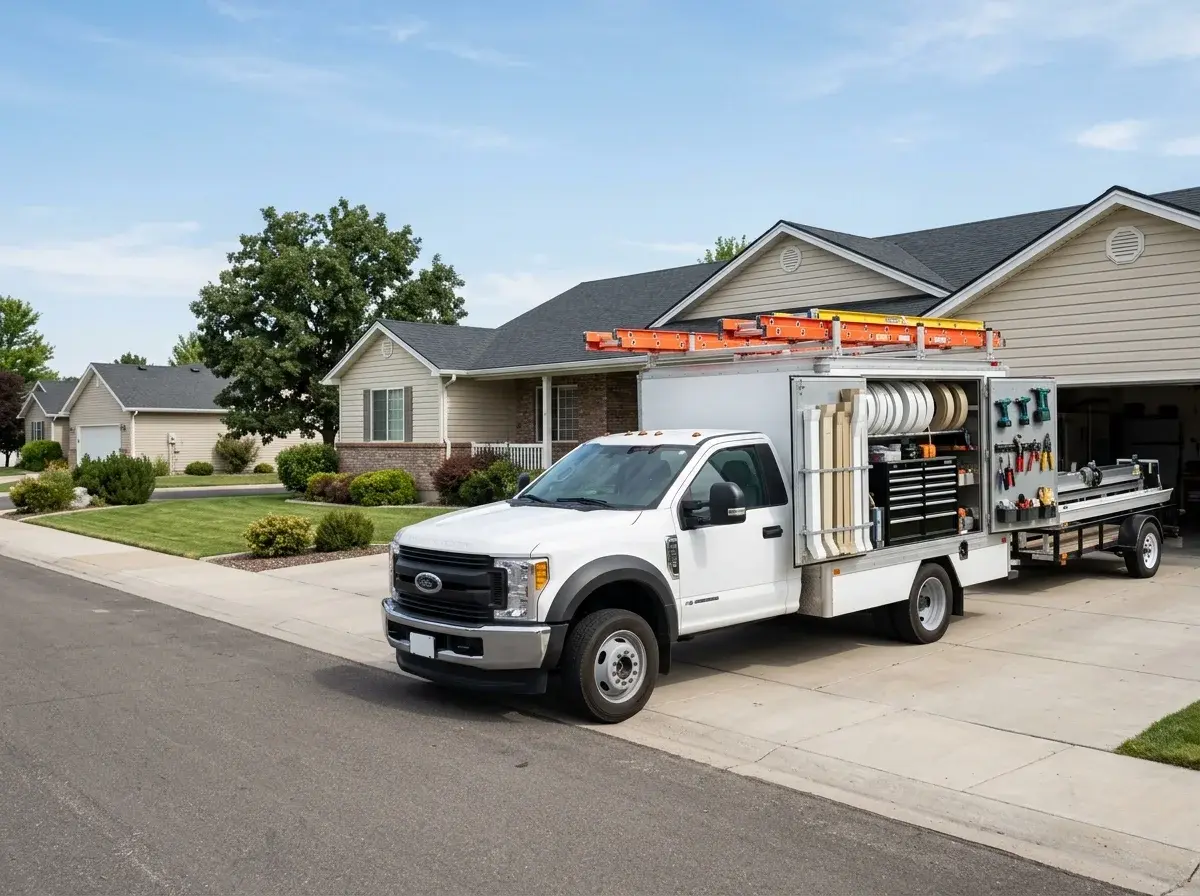
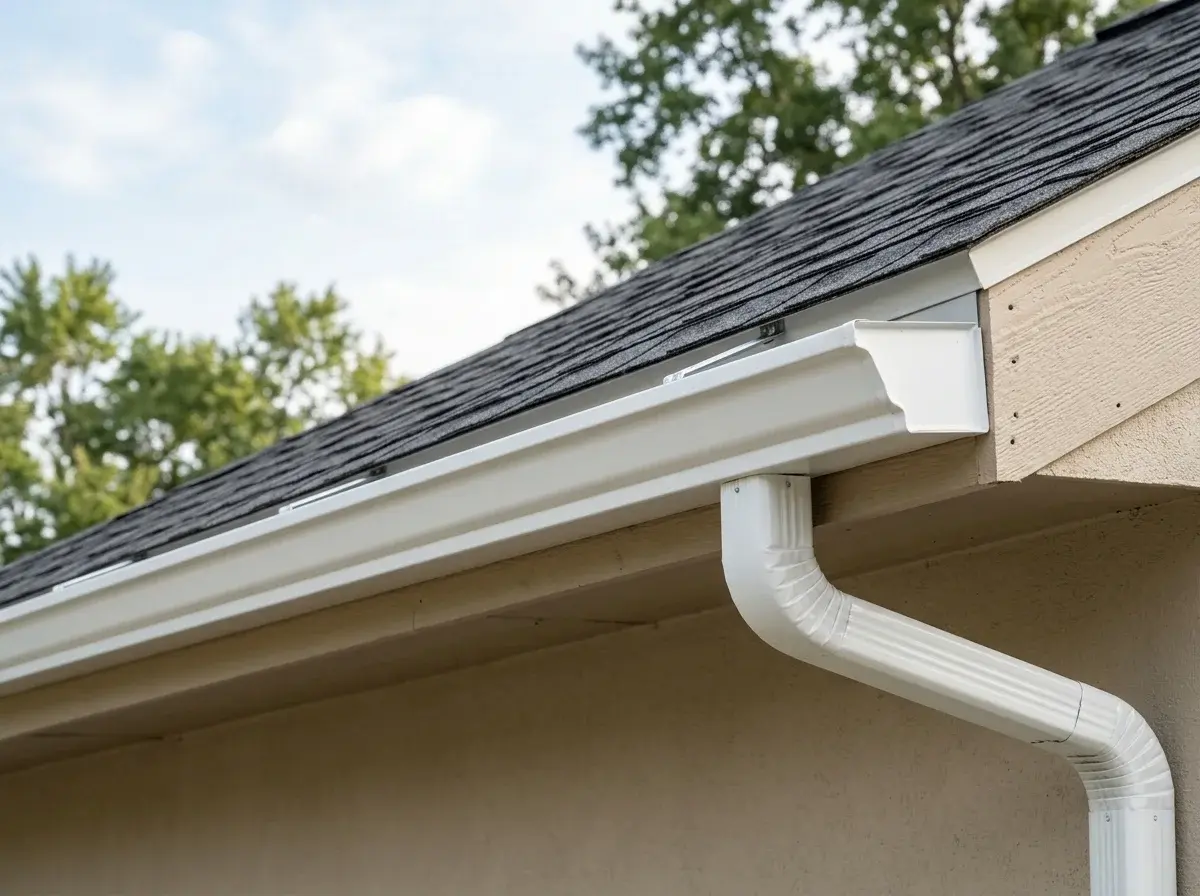
Hiring a gutter contractor in Idaho doesn't require deep expertise. It requires asking eight specific questions and walking away if the answers are vague, evasive, or pressured. The contractors who do this work well will answer every question on this list without hesitation — that's how you can tell who they are. The ones who don't will deflect, change the subject, or push you toward signing today. That's how you can tell who they are too.
Section
1. Are they actually licensed in Idaho?
Idaho requires contractors to register with the Idaho Division of Occupational and Professional Licenses (DOPL). The license number — typically prefixed RCE for Registered Contractor — should appear on the estimate, the invoice, and ideally on the truck and business cards. You can verify it through the DOPL license search, which confirms the license is active, the registered business name matches, and there are no unresolved disciplinary actions on file. Uninsured, unregistered work creates real liability for you as the homeowner. If a worker is injured on your property and the contractor doesn't carry the required coverage, you can be the next-in-line responsible party. If the work damages the home, you have no recourse through a regulatory body. The license isn't a guarantee of quality, but it's the floor — and it's not optional.
Section
2. Do they measure on-site, not over the phone?
Legitimate gutter estimates require physical measurement. The contractor needs to walk the perimeter, measure each eave run, look at downspout placement, identify the gutter profile that matches the roof load, check the fascia condition for rot or pulled fasteners, and confirm color against your trim. None of that can be done by phone or from satellite imagery. When a contractor offers a quote over the phone based on "how many feet of gutters do you have?" — that's a sales gimmick designed to get a number in front of you before you have time to compare. The number will almost always be conservative-low to win the visit; once the crew is on-site, the scope expands and the final invoice climbs.
Section
3. Is the quote written and itemized?
A verbal quote isn't worth the air it was delivered in. You need the price, the scope, the materials, and the warranty all in writing — and you need them itemized so you can see what changes if the scope changes. "Replace gutters: $X" is not a quote. "180 linear feet of 5-inch K-style seamless aluminum with hidden hangers, four 2x3 downspouts, color XYZ, old gutter removal and disposal, water test included: $X with 5-year workmanship warranty" is a quote. The difference matters when you're comparing two contractors, when a scope question comes up mid-job, or when something needs warranty work two years later.
Section
4. What's the workmanship warranty (separate from material warranty)?
These are two different things, and a lot of contractors conflate them on purpose. The manufacturer warranty covers product defects in the aluminum, the sealant, or the gutter guard mesh — if the material itself fails through no fault of installation, the manufacturer covers it. The workmanship warranty covers the install itself: leaks at sealed joints, pulled hangers, downspouts that come loose, sections that weren't pitched correctly. You need both. Reputable installers offer at least a five-year workmanship warranty on installs, sometimes ten. A contractor who only mentions "manufacturer warranty" is hoping you don't ask about workmanship, because their answer is probably "thirty days" or "call us and we'll see."
Section
5. Do they use screws or nails for hangers?
Screws are the right answer for Treasure Valley installs. Nails into fascia have nothing to grip — the fascia wood dries and shrinks as the home ages, the nail loses bite, and the next snow load or wind event starts pulling the hanger forward. We've covered this in our Meridian builder-grade failure post, but it's worth repeating because it's the single biggest determinant of whether the install lasts ten years or thirty. If the contractor says "we use nails because they're industry standard" or "screws are overkill" — that's a contractor who's quoting for short-term price, not long-term performance.
Want this handled by a local crew?
Free on-site estimate across the Treasure Valley — call or send a few details and we'll get back the same day.
Section
6. What sealant — butyl or silicone?
Butyl sealant handles Idaho freeze-thaw cycles. Silicone fails. The Treasure Valley cycles above and below freezing repeatedly between November and March — sometimes multiple times a day on south-facing runs. Silicone hardens at low temperatures, then cracks when the metal expands and contracts. Butyl stays flexible through the thermal cycling and maintains its bond. A contractor who specifies silicone at end caps and miters either doesn't know better (concerning) or knows better and chose the cheaper material anyway (more concerning). Either way, the install is going to leak earlier than it should.
Section
7. Will they water-test the install before leaving?
Water testing every run before the crew leaves the property is industry standard — and a lot of installers skip it because it adds twenty minutes to the job. The test is simple: run a hose along the length of each gutter and watch the water move cleanly to the downspout with no pooling, no overshoot at corners, and no drip from sealed joints. If the test reveals a problem, the crew fixes it before they pack up. If the test doesn't happen, you find the problem in the first hard rain — and getting the crew back out can take days or weeks. Ask whether the install includes a water test. The answer should be unequivocally yes, and you should watch it happen.
Section
8. Do they pressure you to close today?
High-pressure same-day closing is the single biggest red flag in this industry. "This price is only good today," "we have crews in your area tomorrow," "we need a deposit right now to lock it in" — these are all variants of the same tactic, designed to prevent you from comparing quotes or thinking carefully about the spec. Legitimate contractors are happy to leave you with a written quote, give you a few days to compare, and answer follow-up questions by phone or email. They don't need to close you on the first visit because they're confident their work and pricing hold up to comparison. If the urgency is artificial — and it almost always is — that tells you everything you need to know about how the rest of the relationship will go.
Section
Combined red-flag list
Beyond the eight questions, here are the warning signs we see most often when homeowners describe quotes they received before calling us. Any one of these is a yellow flag; two or more is a walk-away:
- Door-to-door cold solicitation, especially after a storm — reputable contractors don't need to knock doors.
- Contractor refuses to inspect or clean the existing gutter before installing guards — guards over clogs always fail.
- Sectional gutters quoted instead of seamless — every joint becomes a future leak.
- Nails specified instead of hidden-hanger screws.
- Silicone caulk used in place of butyl gutter sealant — fails in cold weather.
- Pressure-washing or leaf-blowing the gutter instead of hand-cleaning — pushes debris deeper or scatters it across the yard.
- No fascia inspection before quoting new gutters — bad fascia plus new gutter equals new failure.
- No downspout flush at the end of a cleaning visit (most common source of post-cleaning callbacks).
- Vague color description ("white") without showing physical samples against your fascia.
- Quote dramatically lower than competitors — usually means they're skipping the downspout flush, the fascia check, or the water test.
- No written summary of work performed after the job.
- Mesh demonstration on guards uses water but never debris — the real test is dry pine needles on the guard surface.
- Bulk-buy clearance products with no installer training or certification.
Section
Why we (Boise Gutter Guards) operate the way we do
Every item on this checklist is on this checklist because we've watched contractors skip them and we've watched the consequences land on homeowners. Our license — RCE-6681702 — is on every estimate, every invoice, and every truck, and you can verify it through DOPL before signing anything. We measure on-site, every time, regardless of how small the job is. Quotes are written and itemized so you know exactly what you're paying for. Workmanship warranties are separate from material warranties and stated in writing. We use hidden-hanger screws, butyl sealant, and we water-test every install before the crew leaves the property. There's no same-day-close pressure — if you need a few days to compare, take them.
Section
What to do if a contractor cuts corners
Even with careful vetting, things can go sideways mid-job. If you've hired someone and the work doesn't match the quote, here's the escalation path:
- Document everything with photos before, during, and after — date-stamped phone photos are evidence.
- Withhold final payment until the work is completed to spec and water-tested. Contracts that require full payment before completion are negotiable; don't pay for work you haven't received.
- Put scope questions in writing (text or email) so there's a paper trail of what was agreed.
- If the contractor is unresponsive or refuses to correct documented issues, file a complaint with the Idaho Division of Occupational and Professional Licenses (DOPL). The complaint process exists specifically for situations like this and is a real lever — contractors take license-board complaints seriously because the alternative is losing the license.
- For larger disputes, small-claims court in Ada or Canyon County is an option, but a documented DOPL complaint and a withheld final payment usually resolve things first.
FAQ
Common questions on this topic.
How many quotes should I get for gutter work?
Is a deposit normal for gutter work?
What if the contractor isn't licensed but the price is great?
Should the contractor pull a permit for gutter work?
How do I check Idaho contractor reviews?
Is the lowest quote usually the right answer?
About the author
Mark
Owner· Licensed Idaho Contractor RCE-6681702
Mark owns Boise Gutter Guards, a licensed Idaho contractor (RCE-6681702) serving Boise, Meridian, Eagle, Nampa, Caldwell, Kuna, Star, and Garden City. He started the company after seeing too many Treasure Valley homeowners get sold under-sized gutters, nailed-on hangers, and silicone-sealed seams that fail in the first hard freeze. Every estimate is done in person, every install is backed in writing, and every customer gets a job-site walkthrough before the crew leaves.